Skip to content
You need something sticky for your brand, but choosing the wrong one can be a costly mistake. A label that tears easily or a sticker that feels cheap can hurt your product's image.
The best choice depends on your goal. Choose labels for high-volume, functional product information, as they are designed for fast machine application. Choose stickers for promotional giveaways, as their durable materials and premium feel are made to impress and last.
In my factory, I see this question every day. While stickers and labels share the same "sticky" DNA, they have very different jobs. I always tell my clients that the real choice comes down to intent and application. It is the difference between a tool and a gift. Understanding this core purpose from the start will save you time, money, and ensure your final product does exactly what you need it to do.
What is a label?
You have a thousand jars to get ready for retail, but applying information by hand is too slow. This bottleneck in your production line costs you valuable time and money.
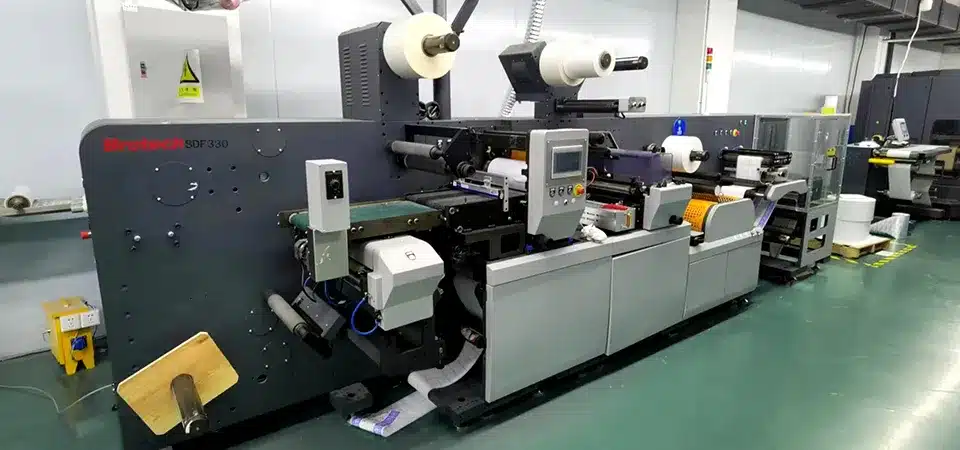
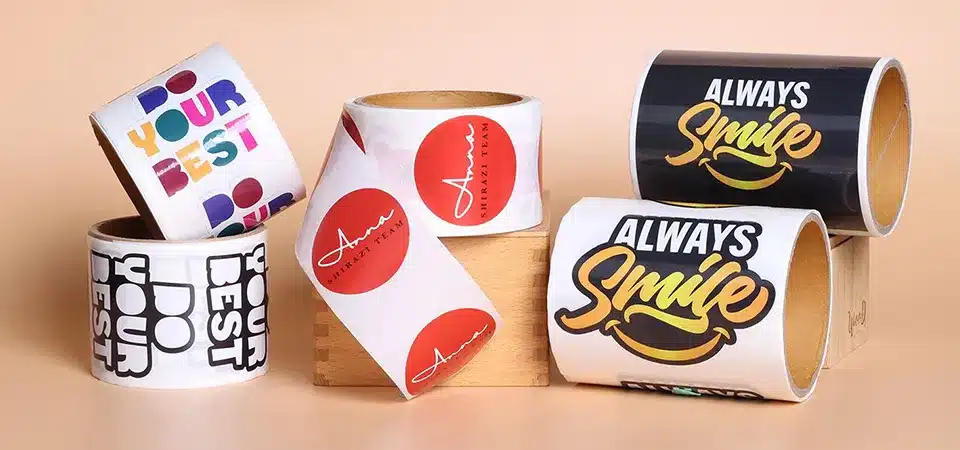
A label is a functional workhorse, designed for high-speed machine application on products. It typically arrives on rolls with a thinner liner to provide information like ingredients, barcodes, or branding efficiently and cost-effectively.
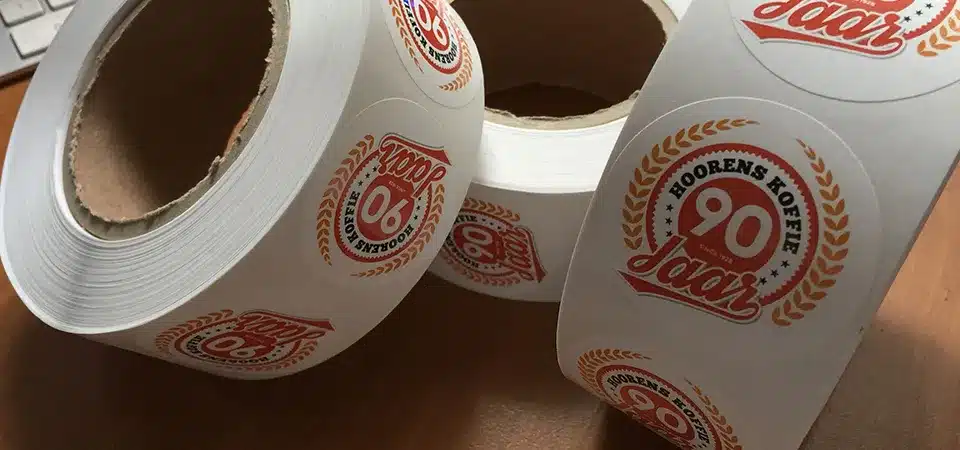
In my business, labels are all about function and speed. Their primary job is to communicate essential information clearly and stay put on a product. When a client needs to mark thousands of items for sale, we always talk about labels first. They are engineered for the factory floor, not for a marketing event.
Key Features of Labels
The design of a label is driven by efficiency. The materials and format are chosen specifically to work with machinery. The backing paper, for example, is usually very thin. We call it a "liner." A thinner liner means we can fit more labels onto a single roll, which means fewer roll changes for the client's labeling machine. It also keeps the cost per unit as low as possible.
Here is a simple breakdown of what makes a label a label:
| Feature | Description | Why It Matters |
|---|---|---|
| Purpose | Informational | To display barcodes, ingredients, nutrition facts, or warnings. |
| Application | Machine Applied | Designed for automated high-speed production lines. |
| Format | Rolls | Allows for continuous feeding into application machinery. |
| Backing | Thin Liner | Maximizes the number of labels per roll and reduces waste. |
Ultimately, you choose a label when the goal is to brand or inform your own products in a professional, scalable way.
What is a sticker?
You want to create a cool giveaway that people will actually use, but a cheap, flimsy item gets ignored. A promotional product that ends up in the trash is a wasted marketing opportunity.
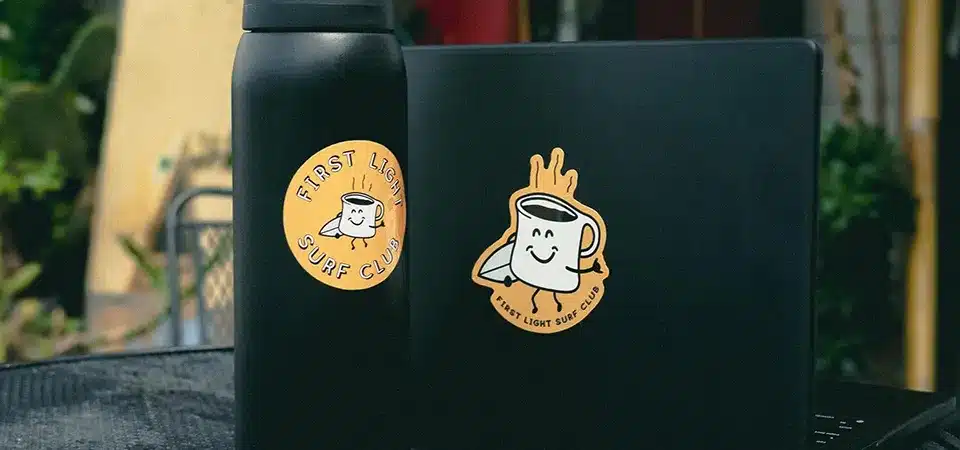
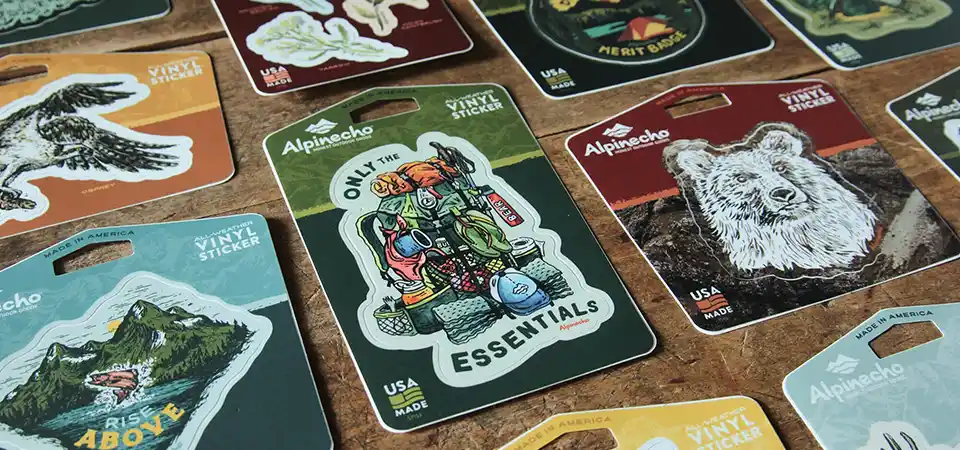
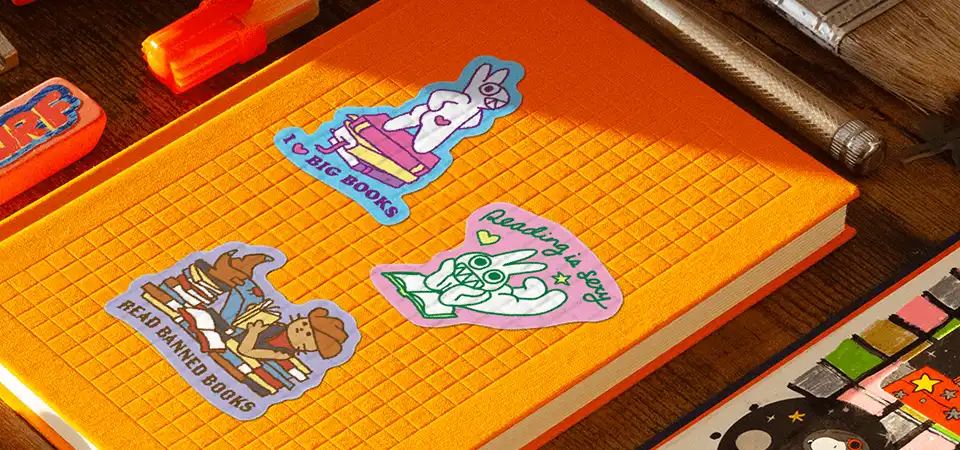
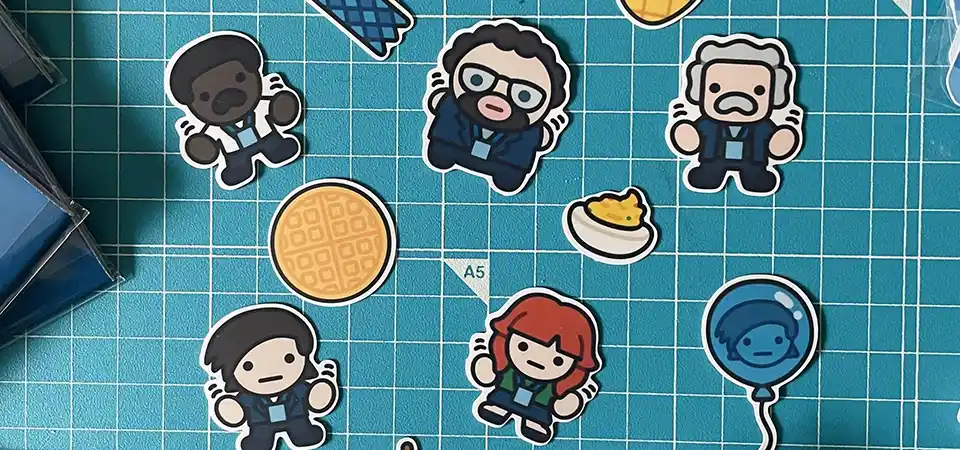
A sticker is a promotional star, designed to be handed out and applied by hand. It is typically made from durable vinyl with a thick backing, giving it a premium feel so people want to display it on laptops or water bottles.

I think of stickers as pieces of brand art. Their job is to look and feel so good that your fans want to become your brand ambassadors. When someone puts your sticker on their laptop, they are giving you free advertising space. That is why we focus on quality above all else for stickers.
Sticker Formats: Die-cut vs. Kiss-cut
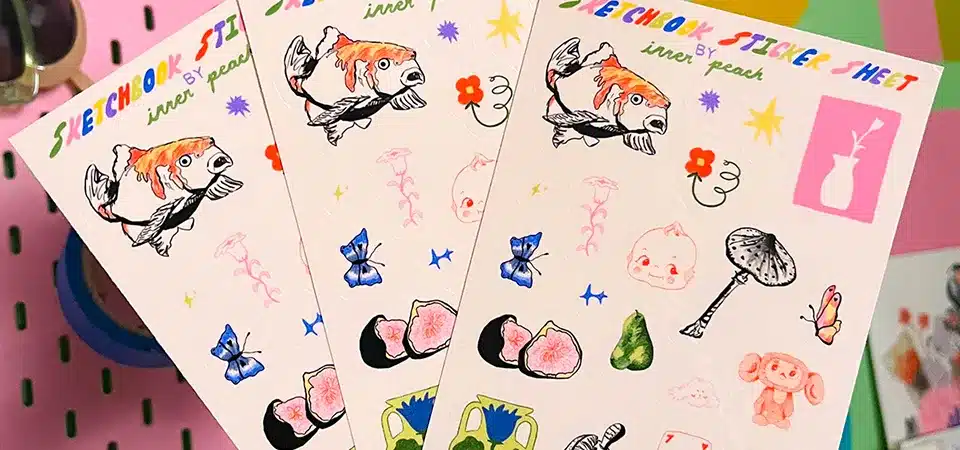
Unlike labels, which almost always come on a roll, stickers are usually delivered as individual pieces or on sheets. The backing is a key feature; we give them a much heavier, premium-grade backing so they feel substantial when handed out and do not curl.
There are two main cuts:
- Die-Cut: We use a blade to cut through both the vinyl and the backing paper, creating a custom-shaped piece. The backing is cut exactly to the shape of the sticker, giving it a clean, professional look that is perfect for giveaways.
- Kiss-Cut: The blade only "kisses" the vinyl layer, cutting the sticker into a shape but leaving the square or rectangular backing paper intact. This makes the sticker easier to peel but looks less finished before application.
When the goal is to turn your logo into an item that fans want to collect and share, a high-quality vinyl sticker is always the winner.
Understanding the differences between labels and stickers
You might think the terms are interchangeable, leading you to order the wrong product. Using labels for a giveaway or stickers for high-volume production can lead to poor results and wasted money.
The key difference is application. Labels are made for machines, with thin roll-fed liners for speed. Stickers are made for people, with thick backings for a premium hand-feel and durability.
As someone who manufactures both every day, I see the difference in the raw materials. For a label order, we load up huge rolls of thin paper or BOPP film. For a sticker order, we use premium, thick vinyl. Even the adhesive can be different, with labels often using a commercial-grade permanent glue and stickers sometimes offering a removable option.
Here is a head-to-head comparison to make the choice clear:
| Aspect | Labels | Stickers |
|---|---|---|
| Primary Use | Information (on your product) | Promotion (given to others) |
| Application | Machine | By Hand |
| Format | Rolls | Individual Pieces / Sheets |
| Backing Paper | Thin, for machine efficiency | Thick, for a premium feel |
| Core Material | Cost-effective paper or BOPP | Durable, weatherproof vinyl |
Think of it this way: a label is part of your product's packaging. A sticker is the product. It is a piece of merchandise designed to travel and represent your brand out in the wild.
Conclusion
Choose labels for functional, high-speed product marking and stickers for durable, high-impact promotional giveaways. The right choice depends entirely on your project's intent and application needs.