Skip to content
You see stickers everywhere, but you might think they are just simple pieces of paper with a sticky back. This can lead to ordering the wrong type of sticker for your project, causing it to fade, peel, or tear within weeks.
A sticker is a piece of printed material, such as paper or vinyl, with a layer of pressure-sensitive adhesive on the back. It is protected by a peel-away backing paper, designed to be applied to a surface for decoration, identification, or communication.
Stickers are deceptively simple. I have spent over a decade in this business, and I can tell you that a sticker is much more than just paper and glue. The details of its layers determine almost everything about how it looks, feels, and performs in the real world. In my factory, we do not just print designs; we engineer a small product that has to survive sun, rain, and constant handling. Understanding these layers is the key to creating a sticker that truly lasts.
A brief history of stickers
You might think stickers are a modern invention, a product of the 20th century. This makes it hard to appreciate how they evolved and why we have so many different types today.
While adhesive pastes have existed for centuries, the modern pre-cut, pressure-sensitive sticker was invented by R. Stanton Avery in 1935. His innovation of a self-adhesive label with a peel-off backing created the foundation for the entire industry as we know it.
People have been trying to stick things to other things forever. In the 1800s, businesses used gum paste to apply "stickers" to products, but it was messy and not very effective. It was not until R. Stanton Avery created the first self-adhesive label, which he called a "Kum Kleen" label, that the modern sticker was born. He built a machine to die-cut the material, creating individual labels that you could peel and stick without any water or mess.
I think about this history often. Avery's invention was for practical labels, but it opened the door for everything else. In the 1960s, a man named Forest Gill combined stickers with the counter-culture movement, creating the first bumper stickers. That is when stickers moved from being purely functional to a form of self-expression. Today, with digital printing technology, that power of expression is in everyone's hands. We can now print a run of 50 custom stickers for an artist just as easily as we can print 50,000 for a corporation.
What are stickers made of?
You grab a paper sticker for your water bottle, and after one wash, it becomes a soggy, peeling mess. Not all stickers are created equal, and choosing the wrong material is a waste of money.
A sticker consists of five key layers: the face material (like vinyl or paper), which displays the design; the adhesive, which makes it stick; the backing paper, which protects the adhesive; the ink for printing; and a protective laminate layer.
In my business, the first question I ask a client is: where will this sticker live, and for how long? The answer tells me exactly which materials to use. Each layer has a specific job.
The 5 Layers of a Sticker
- Protective Layer (Lamination): This is the clear film we add on top. It is the sticker's shield. A gloss or matte laminate layer makes a sticker waterproof, scratch-resistant, and protects the ink from UV fading. Without it, an inkjet-printed sticker will smear with the slightest moisture.
- Ink: This is the color. We use different inks for different jobs. For stickers that need to last outdoors, we use solvent or UV-cured inks that chemically bond to the vinyl. They will not fade for years. Standard water-based inks are fine for indoor use but fail quickly in the sun.
- Face Material: This is the most important choice. It is the main body of the sticker. Think of it as the foundation.
- Adhesive Layer: This is the sticky part. Not all glues are the same. A permanent adhesive bonds aggressively and can damage a surface on removal. A removable adhesive allows for clean peel-off but might not hold as well on rough surfaces.
- Backing Paper: This is the paper you peel away. It is coated with silicone so the adhesive does not stick to it permanently.
| Material | Best For | Durability |
|---|---|---|
| Paper | Indoor use, packaging, short-term | Low (not waterproof) |
| Vinyl | Outdoor use, laptops, water bottles | High (5+ years, waterproof) |
| Clear Film | Product packaging, "no-label" look | High (waterproof) |
| Holographic | Decorative, security, branding | High (waterproof) |
Types of custom stickers
You have a design, but you are not sure how to present it. Do you want individual stickers for a giveaway, or a whole page of different designs for sale?
Common custom sticker types include die cut, kiss cut, sticker sheets, and sticker packs. The choice depends on user experience, as die cuts are cut to the exact shape while kiss cuts are easier to peel from a larger backing.
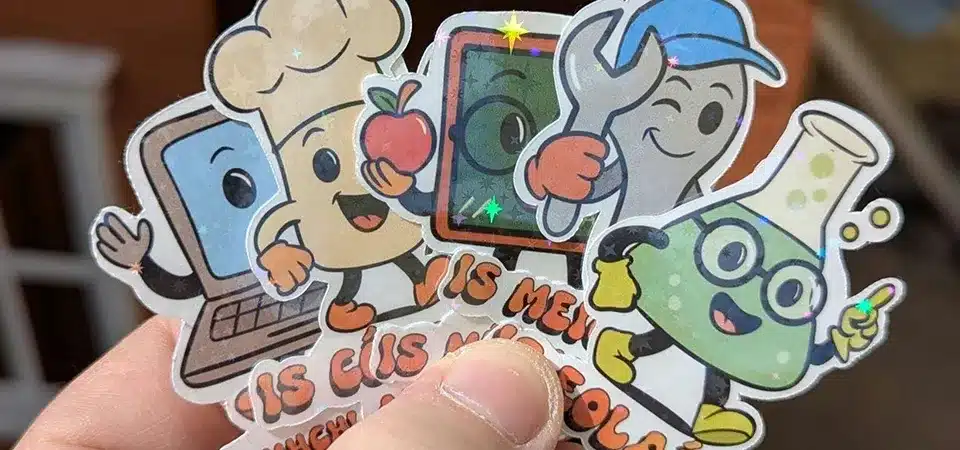
The way a sticker is cut changes how people use it. This decision is not just about looks; it affects a sticker's cost, ease of use, and how it is packaged.
Common Sticker Formats
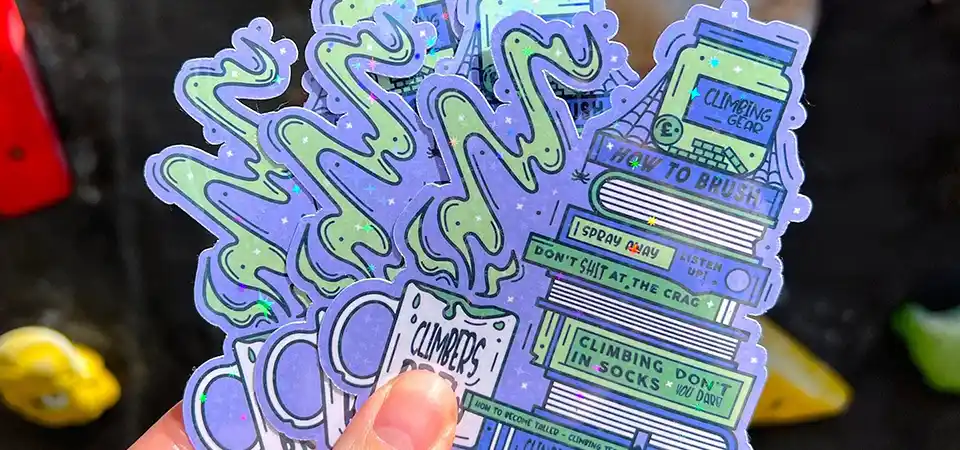
- Die Cut Stickers: These are my favorite. We cut through both the vinyl and the backing paper to match the exact shape of your design. There is no extra white border. This creates a clean, premium product that is perfect for handing out at events.
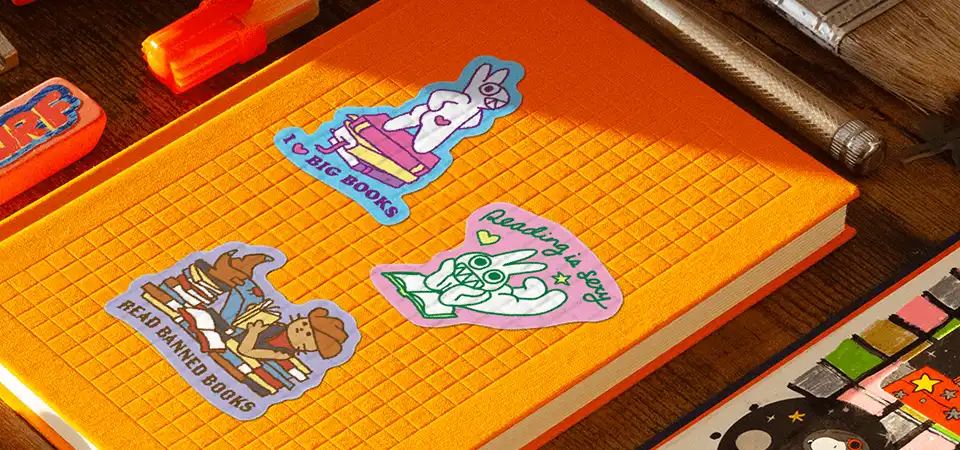
- Kiss Cut Stickers: Here, the blade only "kisses" the vinyl layer. It cuts through the sticker but leaves the backing paper intact. This makes them incredibly easy to peel, which is great for complex shapes. It is the method we use to create sticker sheets.
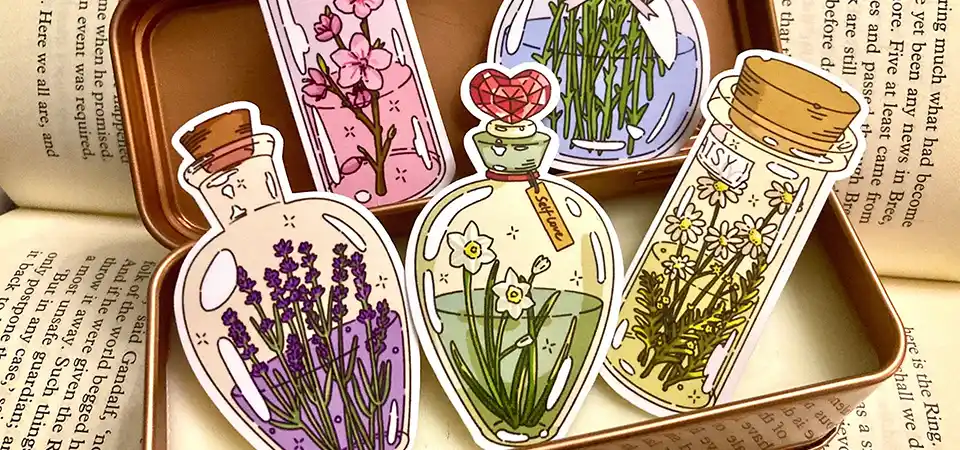
- Sticker Sheets: This is a single sheet of backing paper with multiple kiss cut stickers on it. Artists lovethese because they can sell a collection of their designs on one page.
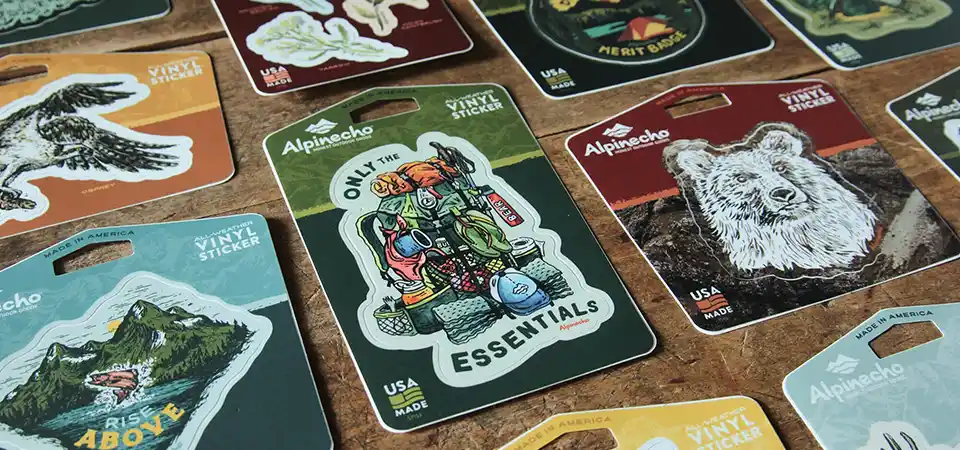
- Sticker Packs: This is a collection of individual die cut stickers bundled together in a small bag or package. They are great for retail or as a gift set.
- Transfer Stickers: These are for text or complex designs with no background. The vinyl lettering or design is sandwiched between a backing paper and a top transfer tape. You peel the back, apply the sticker, rub it on, and then peel the top tape away, leaving only the vinyl design on the surface.
How are stickers made?
You have a perfect digital file, but you do not understand the steps needed to turn it into a physical product you can hold.
The sticker manufacturing process involves preparing the artwork with proper cutlines and bleed, printing the design onto large rolls of face material, applying a protective laminate, and finally, using a digital plotter or laser to cut the stickers into their final shape.
When an order arrives at my factory, it follows a precise path. First, my prepress team checks the artwork. They ensure the resolution is high enough (at least 300 DPI) and that a proper cutline and a 2mm bleed area are present. The bleed is extra color that extends beyond the cutline, so there are no white edges if the cutter shifts slightly.
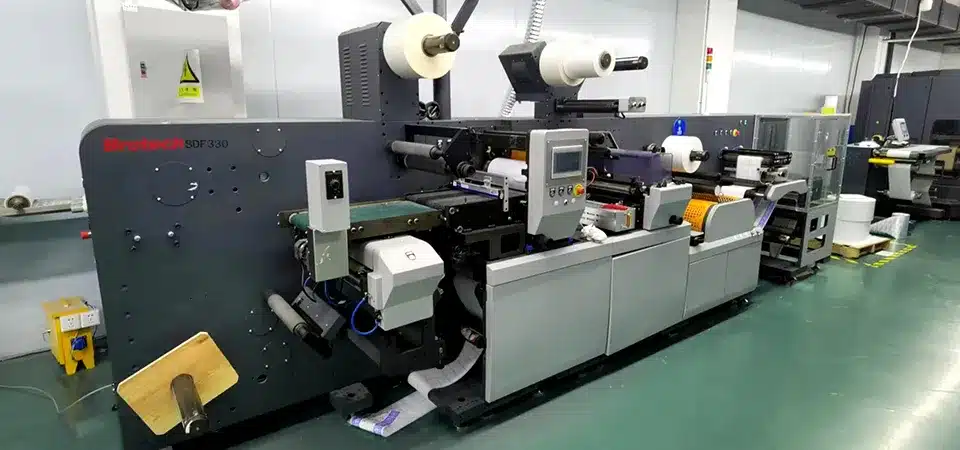
Once the file is approved, we send it to the printers. These are huge, industrial machines that print onto massive rolls of vinyl or paper. After printing, we run the entire roll through another machine that applies a clear laminate film over the top. This is the step that makes the stickers waterproof and durable.
Finally, the laminated roll goes to the cutter. A digital cutting machine reads the cutline from the file and uses a tiny blade to trace the shape perfectly. For very complex designs, we sometimes use a laser cutter. After cutting, we either leave the stickers on the roll for machine application or separate them for manual use.
What are stickers used for?
You're designing a sticker but are not sure of all the ways it can be used beyond simple decoration. This limits your marketing potential.
Stickers are used for a wide range of purposes, from branding and promotion (logos on products) and personal expression (decorating laptops) to providing functional information (warning labels, barcodes) and organizing items (file folder labels).
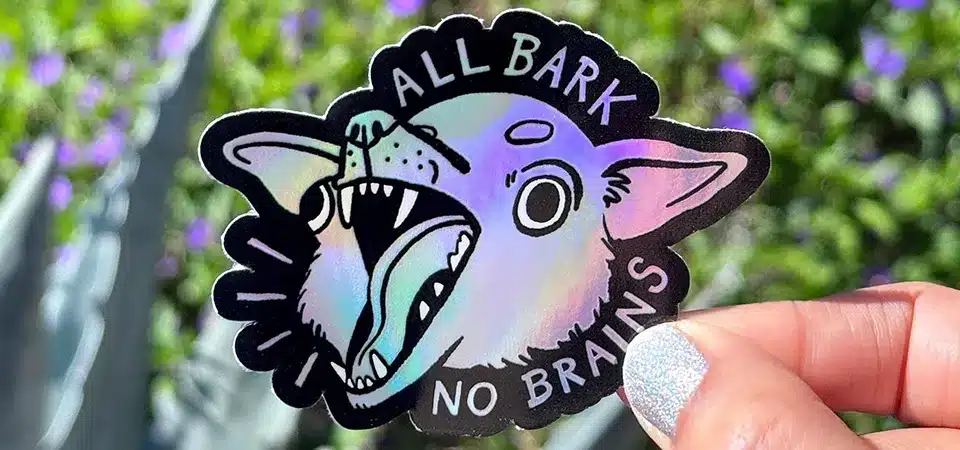
Over the years, I have seen clients use stickers in ways I never imagined. They are one of the most versatile tools for communication because they are cheap, easy to distribute, and can be placed almost anywhere.
I see them fall into three main categories in my daily work:
- Branding and Promotion: This is the most common use. A business will put its logo on a sticker and give it away at a trade show or include it in product shipments. It is like a tiny, mobile billboard. When someone puts that sticker on their laptop, they are endorsing the brand to everyone who sees it.
- Information and Function: Stickers can be labels. They carry important information like barcodes, ingredients, instructions, or safety warnings. In this case, durability and readability are more important than fancy designs.
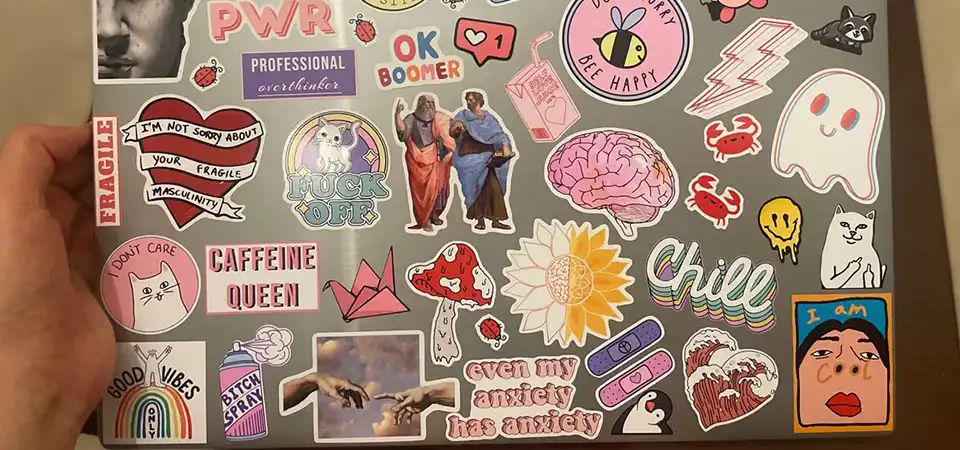
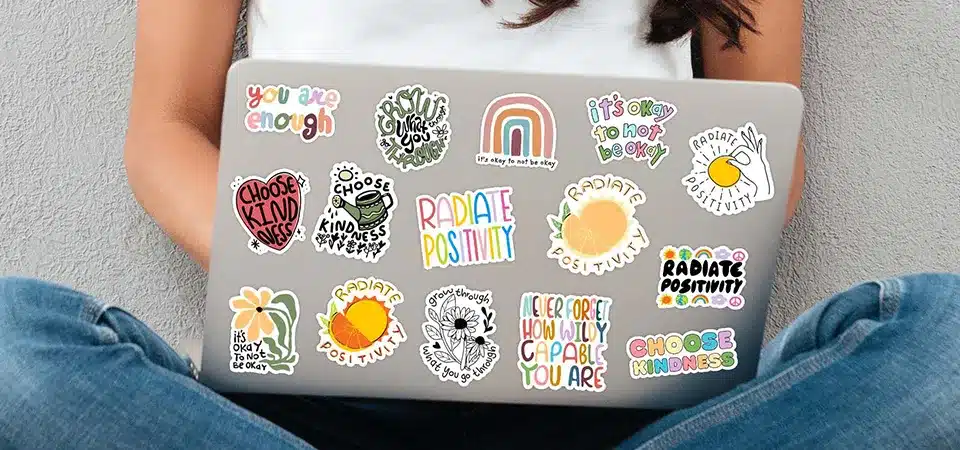
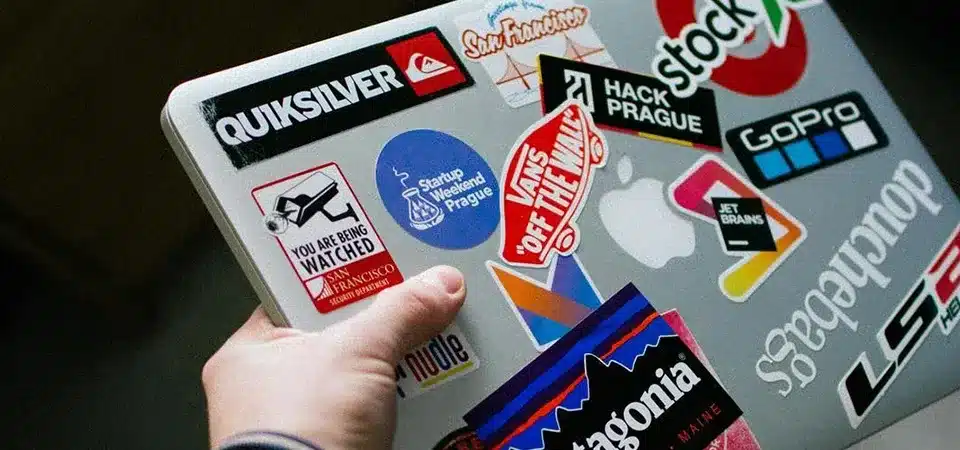
- Personal Expression and Art: This is the most fun category. People use stickers to show who they are. They cover their water bottles, cars, and notebooks with stickers from their favorite bands, artists, vacation spots, or political causes. They act as identity signals, telling a story about the owner.
What's the difference between stickers and labels?
You hear the words "sticker" and "label" used interchangeably, but you are not sure if there is a real difference when placing an order.
Although they are made of the same materials, labels primarily provide information (barcodes, ingredients, warnings) and are often applied by machine. Stickers are primarily used for decoration or promotion and are typically applied by hand.
In my factory, we often use the same machines to produce both. The real difference is their job, or intent. When a client orders "labels," they are usually for a product. They need 10,000 labels for their honey jars, and these labels have to include a barcode, a weight, and an ingredient list. The label is functional. They often come on a roll so a machine can apply them quickly on a production line.
When a client orders "stickers," they usually want something for promotion or decoration. They order 500 die cut logo stickers to hand out at an event. The sticker's main purpose is to be seen and to look good. Durability is key, as a promotional sticker represents the brand's quality. A cheap sticker that peels or fades reflects poorly on the company. So, while they are technically the same thing, their purpose dictates the design and material choices.
What's the difference between stickers and decals?
You see larger graphics on walls or cars and hear them called "decals," making you wonder if they are just big stickers.
The main difference is in the application. A sticker is typically a single piece that you peel and stick directly. A decal is often more complex, like vinyl lettering, and requires a transfer tape to apply the design to a surface correctly.
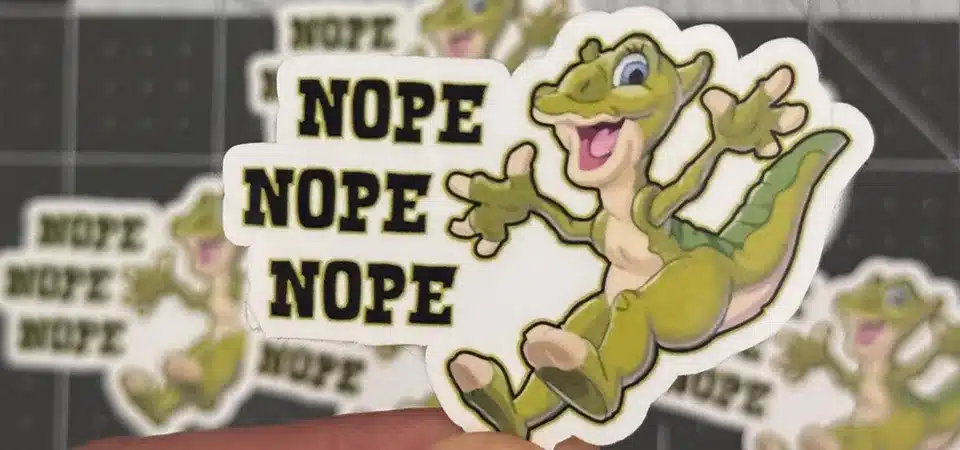
This is a distinction that really matters in practice. A standard sticker is a peel-and-stick operation. It is one solid piece. Think of a bumper sticker. It is simple.
A decal is different. Imagine you want to put your company name on a glass door. You do not want a big clear rectangle around the letters; you want just the letters. To do this, we cut the vinyl letters and apply a layer of transfer tape over the top. You then peel the solid backing paper off, leaving the letters stuck to the clear transfer tape. You press the whole thing onto the door, rub the letters down, and then carefully peel the transfer tape away. Only the letters remain. This transfer process is what defines a decal. Decals are generally larger and more permanent than stickers, often used for vehicles, windows, and walls.
Why are stickers so popular?
You see stickers on everything from a construction worker's hard hat to a teenager's phone, and you wonder why this simple object has such lasting cultural appeal.
Stickers are popular because they offer a cheap, easy, and non-permanent way for people and brands to express identity. They serve as low-effort but highly visible signals of affiliation, belief, or personal taste in a way that other products cannot.
From a manufacturer's perspective, I believe the popularity comes down to access. The rise of digital printing and cutting technology has completely changed the game. Twenty years ago, ordering custom stickers meant you had to order thousands at a time, which was only possible for big companies. It was expensive and slow.
Today, I can take an artist's digital drawing and turn it into 50 high-quality, die-cut vinyl stickers for a very low cost. This has empowered small brands, independent artists, and individuals to produce their own merchandise. A sticker on a laptop or a car is a tiny badge of identity. It says, "I belong to this group," "I support this cause," or "I have been to this place." They are conversation starters. Because they are so affordable to produce and easy to apply, they remain one of the most powerful and enduring forms of self-expression.
Conclusion
A sticker is a layered product engineered for a specific purpose. Understanding its materials, types, and uses ensures you choose the right one to represent your brand or express yourself effectively.