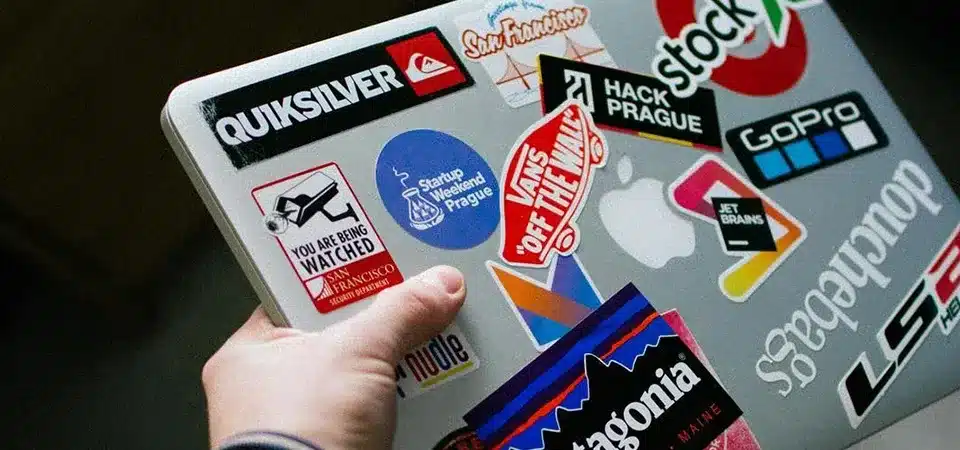
You spent time designing the perfect sticker or money buying a custom label, only to see the edges curl up a few days later. It looks unprofessional on your products and feels frustrating when your favorite decal ruins the look of your laptop or water bottle.
The secret to keeping stickers from peeling is removing all oils from the surface with alcohol before application and allowing the adhesive to cure. You must also choose the correct material—like vinyl for curved surfaces—and apply firm pressure to "wet out" the glue. If edges lift, sealing them immediately prevents total failure.
Many people immediately blame the print shop for "bad glue" when a sticker falls off. In my ten years of running a printing business, I have learned that the adhesive is rarely the problem. The issue is almost always how the sticker was applied or the surface it was stuck to. I want to show you exactly how to make a sticker stay put for years.
How do you pick the right sticker for your surface?
You simply cannot expect a paper sticker to survive on a kayak or a car bumper. If you choose the wrong material foundation for your environment, no amount of glue will keep it attached.
Vinyl and BOPP (plastic) materials with permanent adhesive are better for curved or outdoor surfaces than paper. Paper fibers swell with moisture and cause the sticker to lift, while plastic materials offer flexibility and strong water resistance needed for long-term adhesion.
The first step happens before you even peel the backing paper. You need to understand that not all stickers are built the same. In my factory, we see this mismatch often. A client wants a cheap paper label for a shampoo bottle. I have to tell them that the moisture in the shower will make the paper fibers swell. When the paper swells, it physically pushes itself away from the adhesive layer.
For lasting results, I always recommend Vinyl or BOPP (Biaxially Oriented Polypropylene). These are plastics. They do not absorb water. But beyond the face material, you must look at the "tack" of the adhesive.
- Removable Adhesive: This is low-tack. It is designed to fail eventually. Do not use this for permanent branding.
- Permanent Adhesive: This creates a strong chemical bond.
- High-Tack (Aggressive) Adhesive: We use this for "hard-to-stick" surfaces like textured plastic bins or powder-coated metal water bottles.
If you put a thick, stiff sticker on a curved surface (like a small tube), the sticker has "memory." It wants to return to being flat. This physical force will overcome the glue. For curved items, always use a thinner, more flexible material that conforms to the shape.
| Environmental Factor | Recommended Material | Why? |
|---|---|---|
| Water/Rain | Vinyl / BOPP | Waterproof; won't swell |
| Sunlight | UV Laminated Vinyl | UV rays break down glue |
| Curves (Bottles) | Thinner Polypropylene | Conforms to shape best |
| Indoor/Dry | Paper | Cost-effective |
How should you prepare the surface you’re sticking to?
You might think a surface looks clean, but invisible oils from your fingers or manufacturing residues are sitting there waiting to kill your adhesive. If you skip the cleaning phase, you are technically sticking your label to a layer of dust, not the object itself.
To stop peeling, clean the area thoroughly with 90% Isopropyl Alcohol to remove grease and dust. Ensure the surface is completely dry and avoid applying stickers to highly textured or uneven spots, as these reduce the contact area for the adhesive.
I cannot stress this enough: Surface preparation is the most critical step. In my workshop, we never apply a decal without cleaning the substrate first. Even a brand new water bottle has invisible oils on it from the factory mold.
Here is the process I use for every single professional application:
1. Clean the area first
Do not use Windex or standard household cleaners. They often leave a silicone residue behind to make things "shiny." That residue is anti-stick. Use Isopropyl Alcohol (Rubbing Alcohol). It cuts through oil and evaporates quickly without leaving a trace. If you don't have that, white vinegar diluted with water works, but alcohol is best.
2. Dry it completely
Moisture is the enemy. If you trap a drop of water under the vinyl, it will turn into steam when the item gets hot (like in a car). That steam expands and creates a bubble. That bubble pushes the sticker off. Wipe it down with a lint-free cloth and wait a minute.
3. Avoid textured or uneven surfaces
Adhesive needs surface area to work. Imagine a microscopic view of a textured plastic cooler. It looks like a mountain range. If you put a sticker fast over it, the glue only touches the mix of the "mountains." The "valleys" are just air pockets. Less contact means less grip. If you must stick to texture, you need a specialized "High-Tack" adhesive that acts like a thick gum to flow into those valleys.
How do you apply stickers with care and patience?
You can ruin a perfect sticker by slapping it on hastily and trapping air bubbles underneath. The physical technique you use to press the label down determines if it will stay for five days or five years.
Apply the sticker starting from the center and pressing outward to the edges to eliminate air bubbles. Once applied, use firm pressure to activate the pressure-sensitive adhesive and let the sticker cure for 24 to 48 hours before exposing it to water or extreme temperatures.
Most stickers use what we call PSA (Pressure Sensitive Adhesive). The name tells you exactly what to do. It needs pressure to work. The glue on the back of a sticker is not actually a liquid; it is a semi-solid. When you press down hard, you crush the microscopic glue capsules and force the substance to flow into the pores of the surface.
The Application Method:
I always peel back half the backing paper first. I line up the sticker, press the center down, and then sweep my thumb outward toward the edges. This pushes the air out. If you stick the edges first, you trap air in the middle. Air expands in heat, and that will lift your sticker later.
The Curing Period:
This is the step everyone ignores. You stick it on your snowboard and immediately go out in the snow. Then it falls off. You have to give the chemical bond time to "set." The adhesive needs to flow and bond at a molecular level.
- Wait 24 to 48 hours. Keep the item at room temperature.
- Do not wash it.
- Do not put it in the dishwasher.
- Do not leave it in direct freezing cold.
If you give it this grace period, the bond strength increases significantly. I have seen stickers fail in an hour because they were rushed, while the exact same sticker lasted three years because it was allowed to cure properly.
Should you use a clear sealant or a laminating machine?
Sometimes the environment is just too harsh for a standard sticker, and you need to add an external layer of armor. You can significantly extend the life of your stickers by sealing the edges or adding a clear coat over the top.
For maximum durability, cover your sticker with a clear laminate sheet or apply a liquid sealant like polyurethane or clear nail polish over the edges. This creates a physical barrier that prevents water and dirt from creeping under the adhesive layer and weakens the bond.
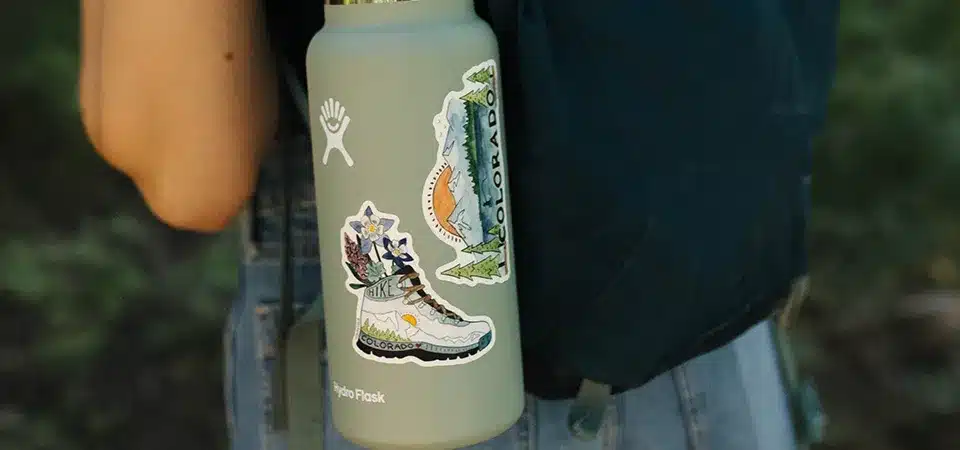
In the professional printing world, we laminate almost everything. We put a clear layer of plastic over the printed layer. This protects the ink from safe scratching, but it also adds thickness.
The DIY Approaches:
If you bought a sticker that isn't laminated, or if you are worried about the edges peeling on a high-friction item (like a phone case), you can seal it yourself.
- Edge Sealing: This is a great trick. Take clear nail polish or a specialized edge sealer pen. Paint a thin line that overlaps the edge of the sticker and the surface it is stuck to. You are essentially "caulking" the seam. This stops water from hitting the side of the adhesive and tunneling underneath.
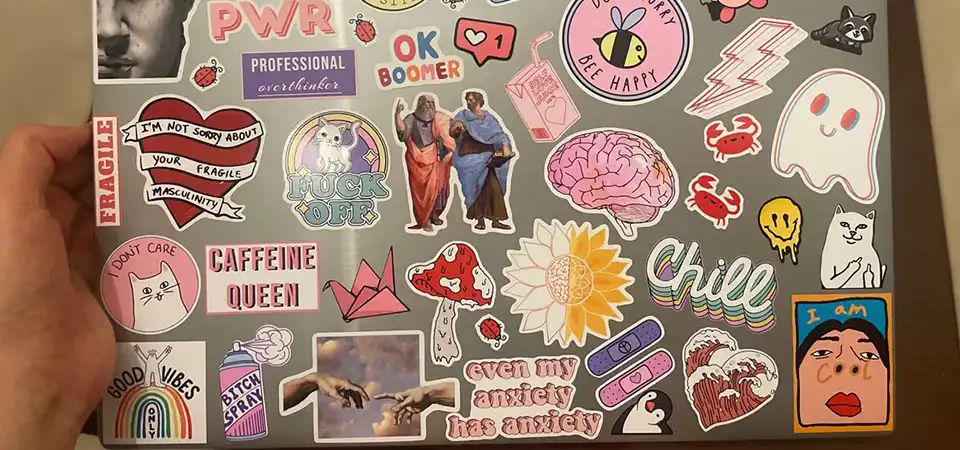
- Spray Sealants: For larger projects, like a sticker-bombed laptop, you can use a clear acrylic spray paint (like Krylon). Tape off the ports of your computer first. This encases all the stickers in one uniform shell.
- Self-Laminating Sheets: You can buy clear vinyl sheets at office supply stores. Clean your sticker, apply this clear sheet over it, and cut it out leaving a slightly wider border. This creates a "bumper" of clear plastic around your design.
I often do this for clients who need heavy industrial labels. We leave a clear border of vinyl around the print. We call this a "perimeter seal." It sacrifices a bit of aesthetics for massive durability.
How can you maintain it and fix peeling stickers?
You might notice a favorite sticker starting to lift, but that does not mean you have to throw it away. With some heat and basic maintenance, you can often rescue a dying sticker and re-adhere it before the damage spreads.
If a sticker starts to peel, heat the area with a hair dryer to soften the adhesive and press it back down firmly. If the glue is gone, apply a thin layer of spray adhesive or double-sided tape to the lifted section and seal the edge to prevent further separation.
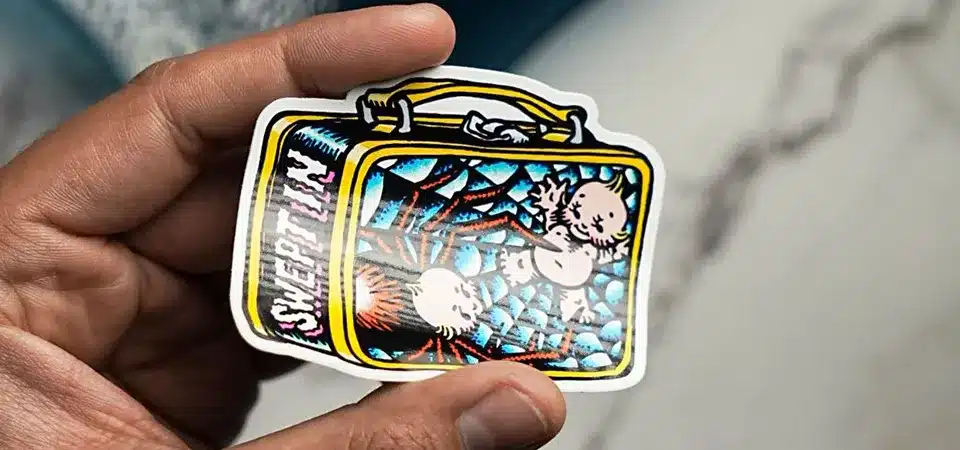
Maintenance is easier than replacement. I tell my customers to keep an eye on "lift." The moment you see a corner come up, you must act. If you let dirt get under that corner, the game is over. Dirt kills glue permanently.
The Heat Trick:
Most adhesives are thermoplastic. This means they get soft when hot and hard when cold.
- Take a hair dryer (not a heat gun, that's too hot).
- Warm up the lifting edge for 10-15 seconds.
- Press it down hard with your thumb. hold it there until it cools.
Often, this reactivates the remaining glue and resets the memory of the vinyl.
The "Rewrap" Method:
If the sticker is totally dry and won't stick back down, you need new glue. Don't use Super Glue (Cyanoacrylate). It is brittle and will crack or eat the plastic.
- Use a spray adhesive. Spray it onto a piece of paper, dip a toothpick in it, and rub it under the peeling edge.
- Press it down.
- Wipe away excess immediately.
If the sticker is on a bottle that goes in the dishwasher, stop doing that. Hand washing will double the lifespan of any decal. The combination of high heat and pressure washing in a dishwasher is the ultimate stress test that eventually fails even the best industrial vinyl.
Conclusion
To prevent peeling, clean your surface with alcohol, choose a vinyl material, press firmly to activate the curing process, and seal the edges if you notice any lifting.