Choosing the wrong sticker material wastes money and makes your product look cheap. Your beautiful designs end up peeling, fading, or tearing, damaging your brand's hard-earned reputation.
The best material depends on your specific needs. Durable vinyl (PVC) is ideal for outdoor use, polypropylene (BOPP) is the go-to for product packaging, and paper is a cost-effective choice for indoor applications where durability is not a major concern.
As a sticker printer, I see firsthand how the right material makes all the difference. A customer might love a design, but if it fails in the real world, the sticker has failed its job. It's not just about looks; it's about performance. Let's get into the technical details so you can choose with confidence.
What are PVC, PET, PE & BOPP films and when should you use them?
You see acronyms like BOPP and PVC on quotes, but they just look like alphabet soup. Choosing the wrong one means your waterproof labels might fail or you've overpaid for durability you didn't need.
These are all plastic films used for labels. PVC (vinyl) is for durable stickers. BOPP is the standard for product labels. PET is for harsh industrial uses. PE is for squeezable containers that need a flexible label.
In my shop, these materials are the foundation of almost everything we print. While they might seem similar, they have very different jobs. BOPP, or Biaxially-Oriented Polypropylene, is our workhorse. It's the clear or white material you see on beverage bottles, cosmetic jars, and food packages. It's strong, resistant to oils and water, and prints beautifully, making it perfect for product branding. PVC, which most people just call vinyl, is thicker and more rugged. It's what we use for bumper stickers, decals for outdoor gear, and anything that needs to withstand the weather. PET (Polyester) is the toughest of the bunch, with high resistance to heat and chemicals, so it's often used for industrial warning labels or asset tags. PE (Polyethylene) is soft and very flexible, which is why you see it on squeezable shampoo bottles.
| Material | What It Stands For | Key Features | Best Used For |
|---|---|---|---|
| BOPP | Biaxially-Oriented Polypropylene | Water/oil resistant, strong, clear or white finish | Product labels (food, cosmetics, beverages) |
| PVC | Polyvinyl Chloride (Vinyl) | Very durable, weatherproof, flexible, UV resistant | Bumper stickers, outdoor decals, floor graphics |
| PET | Polyester | Extremely durable, heat/chemical resistant, rigid | Industrial labels, electronics, warning signs |
| PE | Polyethylene | Soft, highly flexible, stretchable | Squeezable bottles and other flexible containers |
Cast vs. Calendered Vinyl: What's the Real Difference?
You're told you need vinyl, but then you're asked, "Cast or calendered?" The wrong choice for a vehicle wrap can lead to ugly cracks and peeling corners within months.
Cast vinyl is a premium, thin, and highly durable film perfect for conforming to complex curves like vehicle wraps. Calendered vinyl is thicker, less conformable, and more affordable, making it ideal for flat surfaces like windows or signs.
I always tell my clients to think of it like this: cast vinyl is poured, and calendered vinyl is rolled out. This fundamental difference in how they are made determines everything about how they perform. For a sticker to last on a complex shape—like a motorcycle helmet or a van with rivets and curves—it needs to be stable. It can't have any "memory" of wanting to be flat.
Cast Vinyl
To make cast vinyl, a liquid mixture (plastisol) is poured onto a super-smooth sheet and baked in an oven. Since it's not stretched or forced into shape, it's very relaxed and dimensionally stable. This is why it's the gold standard for vehicle wraps. It can conform to the most complex shapes without shrinking back or pulling away over time. It's thin, feels almost like paint, and has a durability of 7-12 years.
Calendered Vinyl
Calendered vinyl starts as a thicker, dough-like paste that is pushed and rolled through high-pressure steel rollers to flatten it into a sheet. This process is faster and cheaper, but it puts stress on the material. The vinyl has a "memory" of being squeezed and will want to shrink back to its original form over time. This makes it perfect for flat or simple curves—think window decals, wall graphics, or simple sign lettering. It's thicker and has a shorter lifespan, typically 3-6 years.
Cast vs. Calendered
When a client comes to me for a full vehicle wrap, I only quote them cast vinyl. Using calendered vinyl would be a disservice, as it would inevitably fail on the complex curves. For a simple "For Sale" sign on a car window, calendered is the smart, cost-effective choice.
| Feature | Cast Vinyl | Calendered Vinyl |
|---|---|---|
| Manufacturing | Poured as a liquid, no stress | Rolled and stretched from a paste |
| Conformability | Excellent; for complex curves (vehicles) | Good; for flat surfaces and simple curves |
| Durability | 7-12 years | 3-6 years |
| Shrinkage | Very low | Higher; will shrink over time |
| Thickness | Thinner (around 2 mil) | Thicker (around 3 mil) |
| Cost | Premium Price | More Economical |
What is Lamination and Why Does it Matter?
Your beautifully printed stickers look great at first, but soon they get scratched and faded. All your design effort and printing cost is wasted when the sticker is ruined in a few weeks.
Lamination is the process of adding a clear protective film over the printed sticker. This layer guards the ink against physical scratches, chemicals, and the sun's UV rays that cause fading. It's essential for any sticker that needs to last.
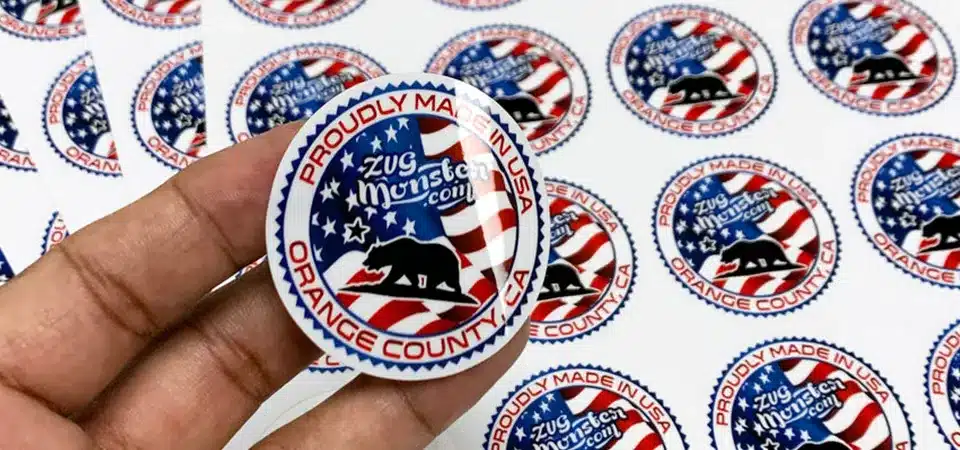
Think of lamination as a sticker's bodyguard. The ink layer itself is quite fragile. A single swipe with a sharp object can scratch it off. Sun exposure will bleach the colors, a process called UV degradation. In my shop, we laminate almost every vinyl sticker we produce because it ensures the product we deliver is professional and long-lasting. It not only protects the sticker but also gives it a finished feel, whether you choose a high-gloss, satin, or smooth matte look. There are two main ways to do this.
Film Lamination
This is what most people think of when they hear lamination. We take a roll of clear protective film—often made of the same cast or calendered vinyl as the sticker itself—and use a machine with rollers to apply it with high pressure. This creates a permanent, durable bond. It's perfect for die-cut stickers, decals, and any application that will face abrasion or weather. This is our standard method for ensuring our bumper stickers and product labels can handle daily life.
What is Liquid Lamination?
Liquid lamination is a different approach where a clear, UV-curable liquid coating is applied over the print. It's often sprayed or rolled on and then cured with UV lights to harden it. While we use film lamination for most of our sticker work, liquid lamination is fantastic for large-format prints like banners or signage with uneven surfaces where a film might not apply smoothly. It provides good UV protection and can be more cost-effective for very large projects, but it generally offers less scratch resistance than a thick film laminate.
Conclusion
Choosing the right sticker material and finish is key. It's a small detail that protects your brand image and ensures your stickers look great and last for a long time.