Skip to content

You work hard to build a brand, design a logo, and package your product, only to have the sticker peel off or fade in the sun a week later. It is frustrating to spend money on printing that makes your business look cheap and unprofessional to your customers.
True sticker quality comes from using 3-6 mil thick outdoor-rated vinyl, permanent acrylic adhesive, and UV-resistant lamination. A high-quality label should withstand water, sunlight, and scratching for years, not weeks. You must also ensure the manufacturer uses precision digital cutting to prevent rough edges.
In my factory, I see many clients who have been burned by cheap, paper-based stickers from budget vendors. They come to me asking why their previous labels fell off their shampoo bottles in the shower or turned white on their car bumpers. I always explain that a sticker is like a house; if the foundation (the material) and the cement (the adhesive) are bad, the house will collapse no matter how pretty the paint (the print) is.
What makes custom stickers and labels high quality?
You cannot judge the quality of a sticker just by looking at a JPG on a computer screen. Real quality is defined by the physical components—the plastic, glue, and protective coating—that determine how the label acts in the real world.
To ensure high quality, you must demand industrial-grade vinyl materials paired with UV lamination and digital cutting precision. These elements work together to create a sticker that is thick enough to apply easily, sticky enough to stay put, and tough enough to resist fading in harsh environments.
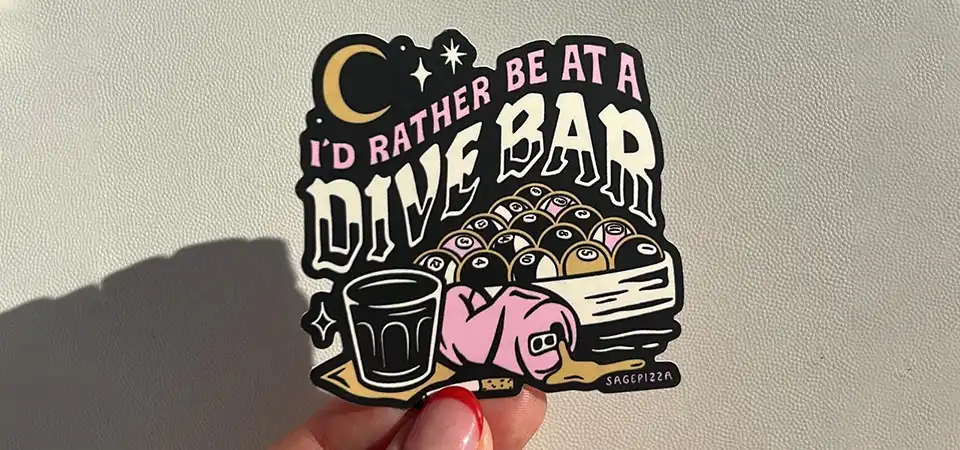
I want to break down exactly what goes into a premium sticker. In my experience, if a printer cuts corners on any one of these five factors, the final product will fail.
Material selection
The base material is the most distinct indicator of quality. Cheap stickers use thin paper or low-grade polypropylene that tears easily. You want to look for Vinyl (PVC). Vinyl is a plastic, not a paper. It is waterproof by nature. I recommend a thickness between 3 to 6 mils. If the material is too thin (under 3 mils), it feels flimsy in your hand and bubbles easily when you try to stick it down. A thicker vinyl adds "heft" to the product, making it feel expensive and easier to apply smoothly.
Adhesive strength
The glue is invisible, but it does all the work. Low-quality stickers use water-based adhesives that dry out and fail when exposed to humidity or heat. I use permanent solvent-based acrylic adhesive. This type of glue hardens over time. We call this "curing." When you press it onto a surface, it bonds chemically. This is why a good sticker is hard to remove after 48 hours. If you are labeling difficult surfaces like textured plastic bins or powder-coated metal, you need an even stronger option called "High-Tack" adhesive.
Print quality
A blurry image screams "amateur." Quality printing requires high-resolution output, typically 1440 dpi or higher. We use eco-solvent or UV-cured inks. These inks bite into the vinyl layer rather than just sitting on top like an inkjet printer at home. This prevents the image from scratching off easily. You should look for crisp text lines and solid colors without "banding" (faint horizontal lines that appear when a printer head is clogged or moving too fast).
Cutting equipment
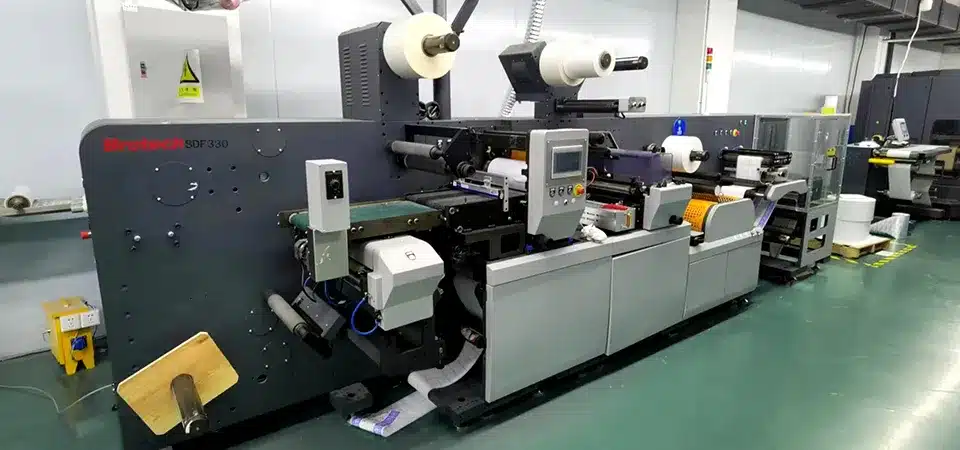
The edge of your sticker matters. Old-fashioned manufacturing often used dull dies that crushed the paper edges. We use digital die-cutting. A tiny, computer-controlled blade traces your design with extreme precision. This means we can cut complex shapes with tight corners without leaving paper dust or jagged edges. When you run your finger along the edge of the sticker, it should feel perfectly smooth.
Smooth lamination
This is the secret weapon for longevity. A raw printed vinyl sticker is good, but a laminated sticker is industrial. Lamination is a clear layer of plastic pressed over the print. It acts as a sunscreen, blocking UV rays that fade colors. It also protects the ink from physical scratches and chemicals like gas or oil. I refuse to sell outdoor stickers without lamination because without it, the ink will fade in the sun within a few months.
What to look for when ordering stickers and labels online?
Ordering custom printing online feels risky because you cannot touch the material before you pay. You need to identify signs that the printing partner is legitimate and invested in your success.
When ordering online, look for a company that offers free, unlimited design proofs and human file checks before production. These services prove that the vendor cares about the accuracy of your order and prevent costly mistakes like low-resolution images or color profile errors.
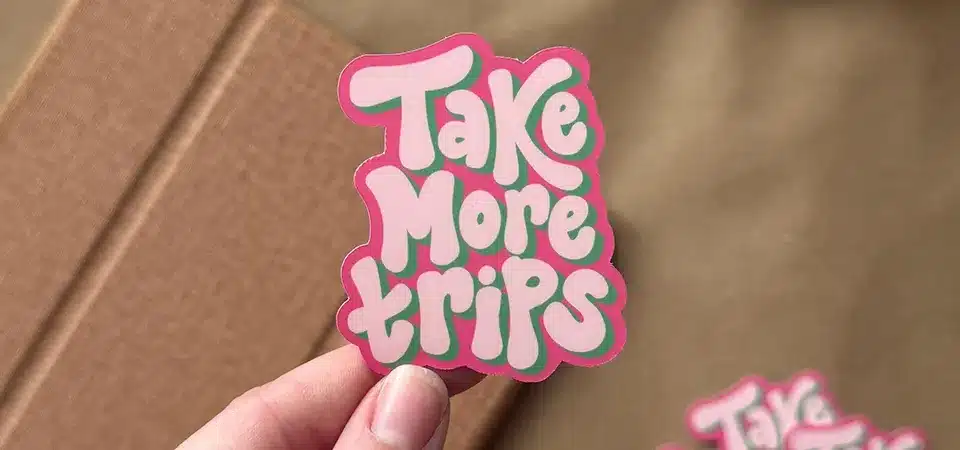
Finding a vendor is not just about the cheapest price; it is about finding a partner who catches your mistakes before they become expensive problems. I have saved countless clients from printing blurry logos just by taking the time to check their files.
Advice and expertise
A robot can process an order, but it cannot tell you that your font is too small to read. A quality print shop provides human interaction. We often tell customers to switch materials based on their intended use—like recommending vinyl over paper for beer bottles because of condensation. If the website you use has zero customer support or advice sections, you are on your own. You want a team that understands print production to guide you toward the right finish, whether that is matte vs. glossy or kiss-cut vs. die-cut.
Free, unlimited design proofs
Never pay for a production run without seeing a proof. A digital proof usually shows the "bleed" (where the cut line will be). Sometimes, your design might be cut off if you didn't leave enough room. We offer unlimited design proofs. This means we will keep tweaking the cut line layout until you are happy. If a company asks you to pay extra for a proof or limits you to one revision, they are prioritizing speed over quality. You need to see exactly how the die-cut line sits around your logo.
Transparent lead times
Quality custom manufacturing takes time, but it shouldn't be a mystery. A reliable printer is honest about turnaround times. In my business, we are clear about the difference between "production time" (how long to print and cut) and "shipping time" (how long to travel from China to your door). If a site promises "Same Day Custom Printing" for complex die-cut orders, be skeptical. Rushing the curing time of the ink or adhesive often results in peeling or smudging later.
Reviews
Social proof is the final check. Look for reviews that mention "durability" and "customer service." Ignoring reviews that just say "fast shipping." You want to find the review from the person who put the sticker on their car six months ago. Did it survive the winter? Did the colors stay bright? These long-term reviews are the only real test of the material quality I talked about earlier.
Conclusion
High-quality stickers require thick vinyl material, UV lamination, and strong acrylic adhesive; ensure your vendor provides digital proofs and expert file checks to guarantee professional, durable results.