Skip to content
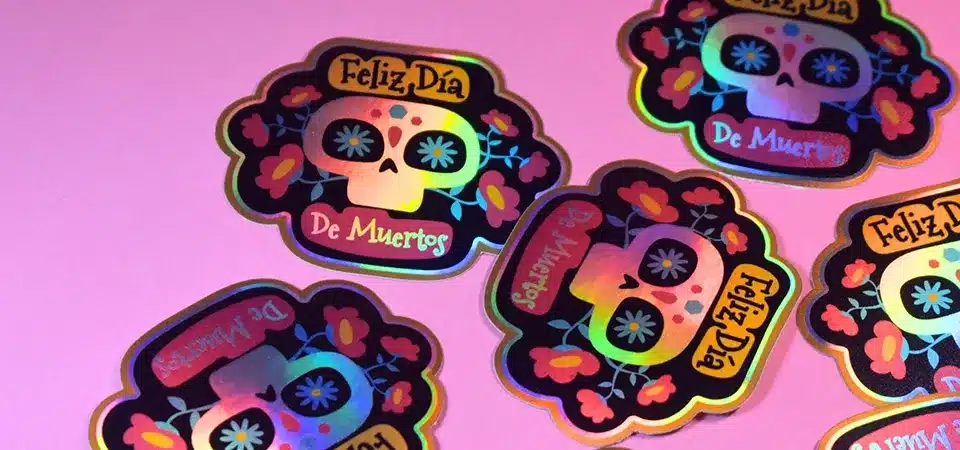
You invest heavily in building a premium brand, only to find cheap knock-offs flooding the market, stealing your revenue and ruining your reputation. It is infuriating to see counterfeiters copy your packaging so easily because you relied on standard printed labels that anyone can scan and reproduce.
Holographic security stickers work by using micro-engraved nanoscale patterns that diffract light, creating 3D depth and movement that cannot be copied by standard photocopiers. Unlike ink, which sits on paper, these holograms are physical grooves embossed into metalized film, requiring expensive master origination equipment to manufacture.
In my experience helping brands secure their products, I have seen business owners assume that a shiny silver sticker is enough protection. It isn't. A true security hologram is an optical device, not just a sticker. It acts like a lock that only the original manufacturer holds the key to. If you understand the mechanics behind this technology, you can stop fighting counterfeiters with weak tools and start using military-grade authentication.
What are security holograms?
You might think any shiny sticker with a rainbow effect is a "hologram," but using generic holographic paper offers zero protection against fraud.
Security holograms are optical devices created through laser interference patterns, not ink printing. They function as a visual authentication seal that displays different images or colors depending on the viewing angle, making them impossible to scan, photocopy, or reproduce without the original master shim.
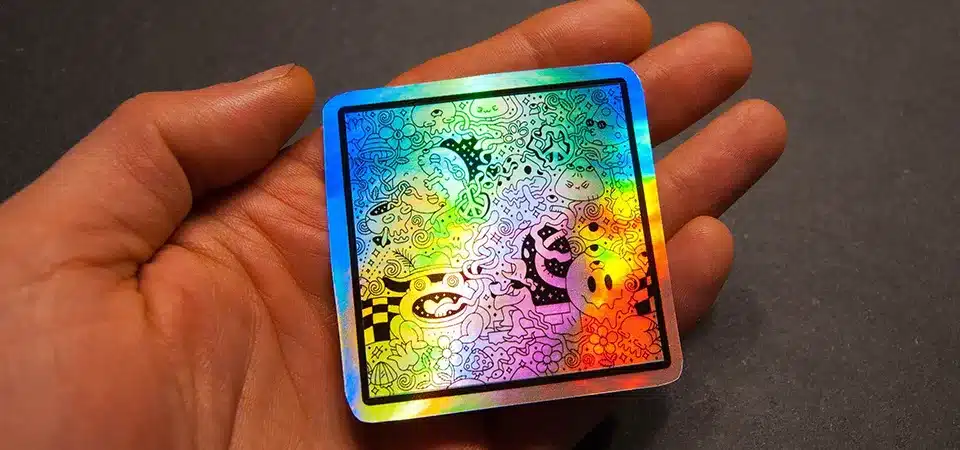
I often have to correct the misconception that "holographic vinyl" (the rainbow material you can buy at a craft store) is a security feature. It is not. That is just a decorative film. A security hologram is an image that has been burned into the material using physics.
Think of it like a vinyl record. A record has physical grooves that music plays from. A security hologram has microscopic grooves (diffraction gratings) that light "plays" off of. When light hits these grooves, it splits into spectral colors and reconstructs a 3D image. Because standard printers use ink dots (CMYK) to create color, they cannot create these physical grooves. If a counterfeiter puts your hologram sticker on a photocopier, the copy comes out looking like a black or grey smudge. This "optical variable" nature is why holograms remain the gold standard for protecting passports, credit cards, and high-value electronics.
| Feature | Standard Printing | Security Hologram |
|---|---|---|
| Technology | Ink Pigments | Light Diffraction |
| Copyable? | Yes (Photocopiers/Scanners) | No (Requires Master Shim) |
| Appearance | Static, Flat | Dynamic, 3D Depth |
| Purpose | Decoration/Info | Authentication/Security |
How are security holograms made?
You cannot simply hit "print" on an office machine to generate a security hologram; the barrier to entry is high, which is exactly what makes it secure.
Security holograms are made through a process called "Master Origination," where a laser beam records an interference pattern onto a photosensitive glass plate. This plate is electroplated with nickel to create a "Master Shim," which is then used to emboss the holographic pattern into a roll of foil under high heat and pressure.
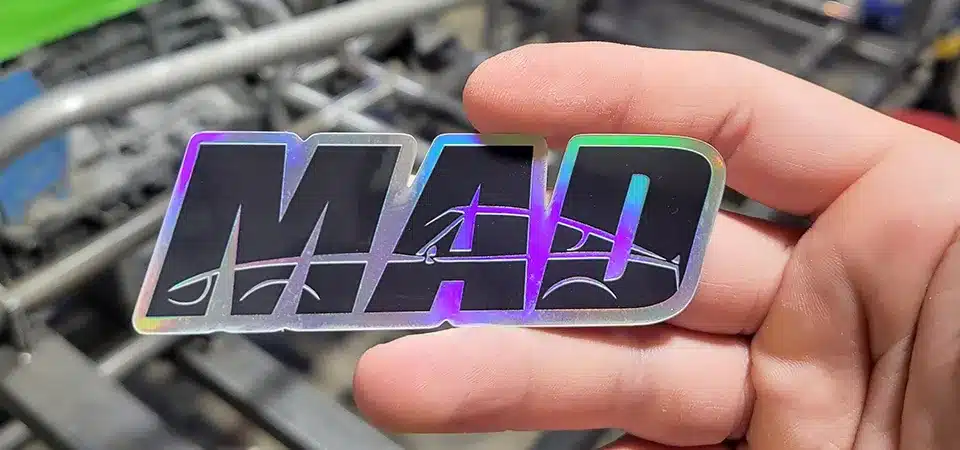
This manufacturing process is where the real security lies. It is incredibly complex and requires millions of dollars in equipment, which acts as a natural barrier to counterfeiters.
- Origination: It starts in a vibration-free laboratory. A laser beam is split into two: a reference beam and an object beam. They meet on a glass plate coated with photo-resist. The specific way the light waves overlap creates the hologram. This is like burning a fingerprint into glass.
- Electroforming: Because glass is fragile, we need a metal stamp. We dip the glass master into a chemical tank and use electricity to grow a layer of nickel on top of it. When we peel this nickel layer off, it has the negative impression of the hologram. This is the Master Shim.
- Embossing: The shim is wrapped around a heated roller. We run a thin film of PET (polyethylene terephthalate) with a special lacquer coating through the machine. The roller presses the microscopic ridges from the shim into the lacquer.
- Metallization: To make the pattern visible, we coat the embossed film with a microscopically thin layer of aluminum. This turns the transparent grooves into a mirror, reflecting the light and creating the rainbow explosion you see.
Do hologram stickers have security features?
If you just use a simple 2D logo, a sophisticated counterfeiter might be able to visually simulate it well enough to fool a hurried customer.
High-quality hologram stickers incorporate multiple layers of overt and covert security features, such as kinetic movement, microtext (visible only under magnification), and hidden laser-readable images. These layered features allow not just customers, but also retailers and investigators, to verify authenticity with 100% certainty.
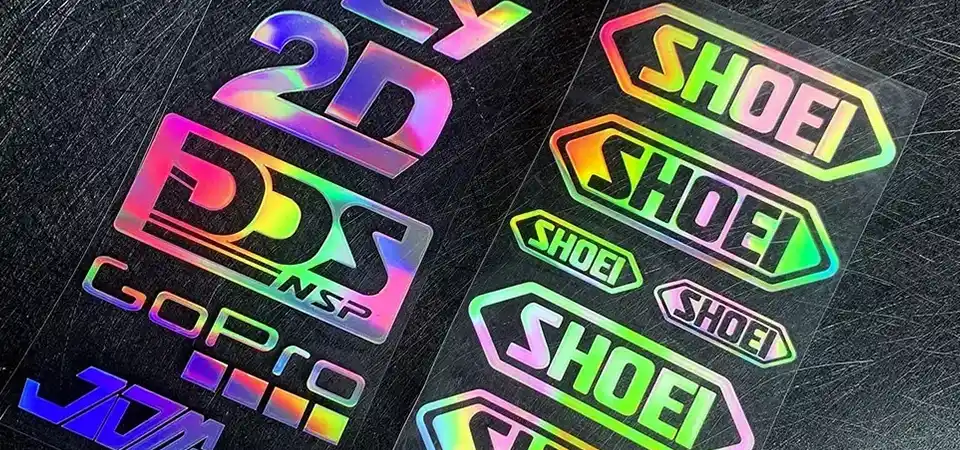
I always advise clients to use a "layered" security approach. You want features that are easy for a customer to check (Overt) and features that only you know about (Covert).
- Overt (Public) Features: These verify the product instantly.
- Kinetic Effect: When you tilt the sticker, the logo should expand, contract, or flip to a different image.
- True Color: The image looks like a real photograph, not just a rainbow outline.
- Covert (Hidden) Features: These are for your inspectors.
- Microtext: Text that is smaller than 0.1mm. To the naked eye, it looks like a solid line. Under a 100x microscope, it reads "VALID VALID VALID." Standard printers cannot print this small; the ink spreads and blurs the letters.
- Laser Readable (CLR): A hidden image that only appears when you shine a laser pointer at the hologram and project it onto a wall.
- Tamper Evidence: The security isn't just visual. We use "frangible" materials. If someone tries to peel the sticker off a box to move it to a fake product, the hologram self-destructs, leaving behind a "VOID" or honeycomb pattern.
| Feature Level | Type | Detected By | Function |
|---|---|---|---|
| Level 1 | 3D Depth / Kinetic Flip | Naked Eye | Consumer Verification |
| Level 2 | Microtext / Nano-text | Magnifying Glass | Retailer/Inspector Check |
| Level 3 | Hidden CLR Image | Laser Pointer | Forensic Authentication |
| Material | Tamper Evident (VOID) | Physical Removal | Anti-theft / Anti-transfer |
How can I create a holographic image?
You want to design your own hologram, but you are confused by how to translate a flat digital file on your computer into a 3D light-refracting tunnel.
You cannot create a true security hologram yourself; you must provide a 2D digital art file to a certified manufacturer who will convert layers of color into depth maps for the master origination. However, for non-security aesthetic purposes, you can simulate the effect by printing opaque white ink over holographic vinyl stock to block out specific areas.
When clients come to me saying, "I want to make a hologram," I have to clarify their goal. Are they protecting a $1000 watch, or making a sticker for a band?
For Security (Origination): You don't "draw" the hologram. You supply a vector file (like Adobe Illustrator) with your logo. We then separate your design into layers.
- Layer 1 (Foreground): Your Logo (We might assign this a "float" effect).
- Layer 2 (Background): A repeating pattern (We assign a "depth" effect so it looks 1 inch behind the logo).
- Layer 3 (Security): We add the microtext and guilloche patterns (intricate banknote-style lines) during the mastering software phase. You typically pay a "Mastering Fee" for this setup, which can be expensive, but it owns the customized plate.
For Aesthetics (Stock Hologram): If you can't afford a custom master (which often requires ordering 10,000+ units), we use "Stock Hologram" material. This vinyl already has a generic rainbow pattern (like dots or broken glass). We verify your design by printing white ink on top of it. Where we print white, the sticker is matte and opaque. Where we leave the space empty, the holographic stock shines through. This is cheap, fast, and looks cool—but it is not high security because anyone can buy that same vinyl.
Conclusion
Holographic security stickers work by embossing nanoscale grooves into film to diffract light, creating uncopyable 3D effects; real protection requires custom master origination, while generic holographic vinyl only offers aesthetic appeal.