Skip to content

You see them on bananas, bumpers, and laptops, but you probably haven't stopped to wonder where they actually came from. You might be surprised to learn that their history spans thousands of years.
Stickers are not just modern fun; they evolved from ancient Egyptian market labels to complex activism tools. From the invention of the postage stamp to the accidental creation of scratch-and-sniff, stickers have transformed how humans communicate, protest, and trade. Here are 13 facts that reveal their hidden history.
Most people think stickers are just cheap pieces of paper for kids, but they are actually a massive part of global commerce and culture. As someone who manufactures them for a living, I can tell you there is a fascinating technology and history behind the sticky backing. Let’s peel back the layers and look at the strange, surprising truth about stickers.
1. Stickers go all the way back to ancient Egypt
You might assume stickers are an invention of the industrial revolution, but the concept of attaching a label to a product is ancient. You need to look much further back in history to find the first version.
Archaeologists have found evidence that ancient Egyptians used primitive stickers to mark market prices. They used pieces of papyrus paper plastered onto pottery jars with a glue made from animal by-products or flour paste. This ensured fair trade long before modern adhesives existed.
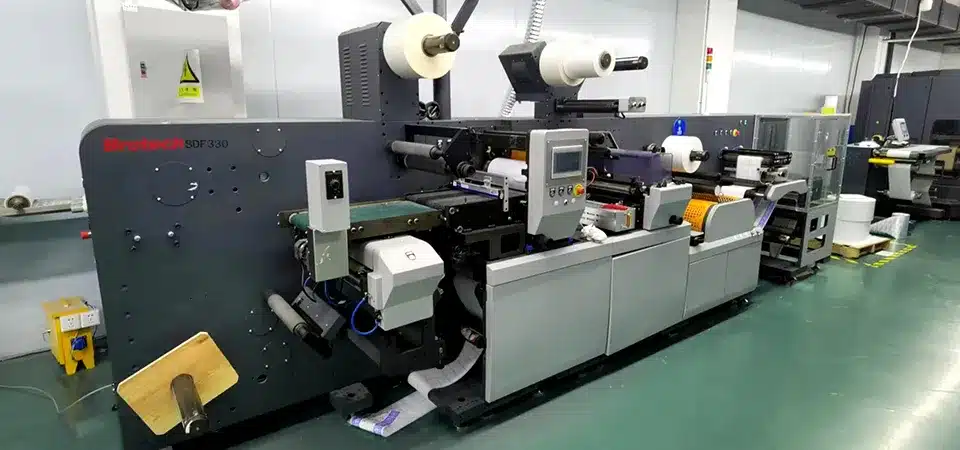
In my line of work, we obsess over "tack" and "adhesion," but the Egyptians had to work with what nature gave them. Excavations have shown that merchants needed a way to identify what was inside sealed ceramic jars without opening them. They didn't have self-adhesive vinyl, so they created a paste, likely from boiled animal connective tissue or wheat flour mixed with water. They would write the contents or the price on a scrap of papyrus and paste it directly onto the wall of the vessel.
This is technically the great-grandfather of the product label. It served the exact same purpose as the labels I print today: identifying a product and establishing value. While these didn't peel off cleanly like a modern Avery label, the intent was there. It shows that as long as humans have been selling things, we have had a need to "stick" information onto our goods. It is fascinating to think that the industry I work in today started in an open-air market thousands of years ago.
2. The invention of postage stamps paved the way
You likely take "lick and stick" stamps for granted, but they were a revolutionary technology in the 1800s. You should credit them for introducing the world to the idea of mass-produced papers with adhesive backings.
Sir Rowland Hill invented the first adhesive postage stamp, the Penny Black, in the UK in 1840. This introduced gum arabic adhesive to the masses, standardized shipping costs, and proved that paper could be pre-coated with glue for later use.
Before 1840, the person receiving the letter had to pay for the postage, not the sender. This caused huge problems because many people refused to pay for letters, and the post office lost money. Rowland Hill’s idea was simple but brilliant: create a pre-paid label that the sender attaches. To make this work, they applied a layer of gum arabic—a natural gum made from the hardened sap of the acacia tree—to the back of small pieces of paper.
When you licked it (or wet it with a sponge), the gum became sticky. This was the first time the general public interacted with "rewettable" adhesive on a massive scale. It changed communication forever. In the printing world, we respect this moment because it was the first true successful mass production of adhesive labels. Although we mostly use pressure-sensitive glue now (no licking required), the manufacturing processes for coating large rolls of paper with adhesive began right here with the humble stamp.
3. Stanton Avery changed everything in 1935
You have probably struggled with peeling a label off only to have it tear or leave a mess. You can thank a struggling entrepreneur named Stanton Avery for fixing that problem forever during the Great Depression.
In 1935, Stanton Avery invented the first self-adhesive label that did not require moisture to stick. He used a die-cut machine with a continuous liner, creating the "Kum-Kleen" label. This invention launched the modern multi-billion dollar sticker industry we know today.
This is the most critical moment in sticker history. Before Avery, if you wanted a label, you had to deal with messy glue pots or water. Stanton Avery was a clerk in Los Angeles who saw a need for store pricing labels that could be applied quickly and removed easily. He built a machine using a washing machine motor and parts of a saber saw. His genius idea was the "release liner"—that slick backing paper that you peel away.
By coating the paper with a rubber-based adhesive and placing it on a liner, he created the "pressure-sensitive" label. You just press it, and it sticks. No water, no heat. He called them "Kum-Kleen" because they could be removed without leaving residue. To this day, the company he founded, Avery Dennison, is a giant in the material world. Every time I load a roll of vinyl into my printer, I am using the basic technology Stanton Avery invented in his garage. It made stickers portable, instant, and incredibly easy to use.
4. Bumper stickers started post-WWII
You see cars covered in opinionated slogans every day, but this wasn't always possible. You might not realize that bumper stickers only became a phenomenon once car bumpers changed from chrome to sophisticated body parts.
Forest P. Gill came up with the bumper sticker in the late 1940s. Before this, people tied cardboard signs to their cars with wire. The post-war travel boom and new surplus fluorescent inks helped these sticky advertisements become a staple of American tourism and politics.
Before World War II, cars didn't have the wide, flat bumpers suitable for stickers, and the adhesives weren't durable enough for outdoor weather. After the war, two things happened: Americans started driving everywhere for vacations, and printer Forest P. Gill combined high-visibility fluorescent ink (which was developed during the war) with self-adhesive paper. He saw the potential for "mobile billboards."
Tourists attractions like Rock City and Meramec Caverns started buying them by the thousands. They would even have staff run out and slap a sticker on your car while you were visiting—sometimes without asking! It became a status symbol that said, "I have traveled." Later, politicians realized that a moving car was the perfect place for a campaign slogan. In my business, car stickers (or decals) are still one of the top sellers, though now we use high-grade vinyl that doesn't ruin your paint like those early, permanent glues did.
5. National Sticker Day celebrates sticky creativity
You might not have marked your calendar, but there is an official holiday dedicated to stickers. You can join artists and collectors every year to celebrate the joy of peeling and sticking.
National Sticker Day is celebrated on January 13th every year. This date was chosen to honor the birthday of Stanton Avery, the father of the modern sticker. It is a day when sticker shops, planners, and crafters launch new designs and share their collections.
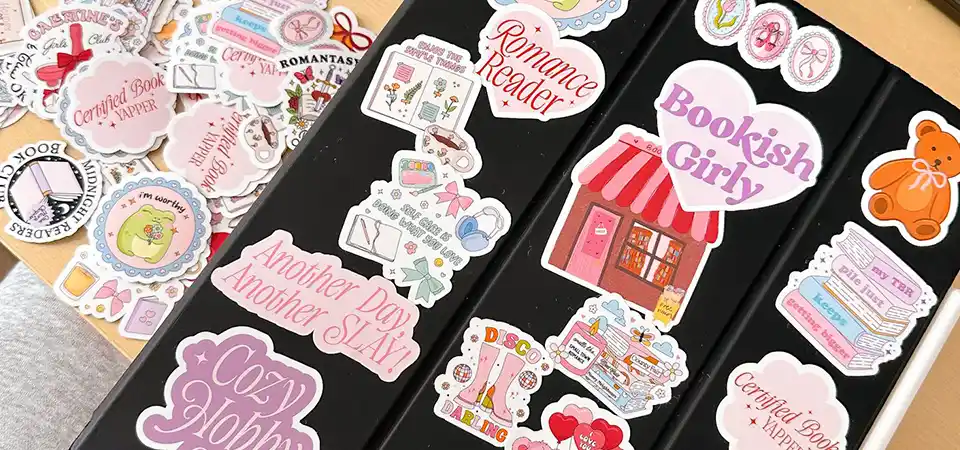
This holiday is a relatively new phenomenon, driven largely by the explosion of the planner community and small business sticker shops on platforms like Etsy and Instagram. However, tying it to Stanton Avery’s birthday gives it legitimate historical weight. On this day, you will see social media flooded with hashtags like #NationalStickerDay.
For print shops like mine, it is a busy time. We often see artists rushing to get special commemorative designs printed in early January. It is not just about sales; it is about community. People show off their "sticker hauls," trade with pen pals, and decorate everything from water bottles to journals. It serves as a reminder that stickers are a medium of happiness. They are small, affordable pieces of art that anyone can own. If you haven't celebrated before, grab a pack of your favorites next January 13th and stick them on something—it’s what Stanton would have wanted.
6. Scratch-and-sniff stickers were a happy accident
You likely remember the smell of fake grape or pizza from your childhood sticker collection. You might find it funny that this technology wasn't originally meant for stickers at all, but for carbonless copy paper.
3M chemist Gale Matson invented the technology while trying to create carbonless paper. He developed "microencapsulation," where scent oils are trapped in tiny bubbles that break when scratched. This led to the scratch-and-sniff craze that dominated the 1970s and 80s.
This is one of those classic "mistake turned into gold" stories. In the 1960s, 3M was looking for ways to improve office products. Matson found a way to encapsulate ink so it would only appear when you wrote on the paper. The marketing team eventually realized they could encapsulate perfume oils instead of ink. When you scratch the sticker, you physically rupture these microscopic bubbles, releasing the scent molecules into the air.
The durability of these stickers is insane. I have seen vintage stickers from the early 1980s that still smell like root beer or popcorn when scratched today. Producing these requires a specialized screen printing process where the scented slurry is applied as the final layer. It is harder to find manufacturers who do this today because it is a niche process, but the nostalgia factor keeps it alive. It is a perfect example of how complex chemistry can create simple childhood joy.
7. Fruit stickers are edible (but don’t eat them)
You have probably accidentally swallowed a piece of a sticker on an apple and panicked. You can relax knowing that the agencies regulating food safety thought about this possibility ahead of time.
The FDA and European food agencies require that the adhesive used on fruit labels be starch-based and safe for human consumption. While the plastic or paper sticker itself is not technically food, it will pass through your system without causing harm if accidentally swallowed.
I get asked about this often. The labels on your bananas and apples are technological marvels called PLU (Price Look Up) codes. Because they are applied directly to the skin of raw food, the glue must be "food grade." This usually means it is made from dextrin or other plant-based starches. If the glue were toxic, it could migrate through the skin of the fruit and into the flesh you eat.
However, a common myth is that the entire sticker is edible edible paper (like rice paper). That is usually false. Most fruit stickers are made of thin vinyl or coated paper so they don't disintegrate in the misty spray of the grocery store produce section. So, while the glue won’t hurt you, and the plastic is non-toxic, it’s not exactly a snack. We always recommend washing your fruit and peeling the sticker off. It’s designed to be safe, not delicious.
8. Custom stickers power self-expression today
You look around a coffee shop and see laptops covered in logos, bands, and quotes. You are witnessing a modern form of identity where people curate their personal brands on the back of their devices.
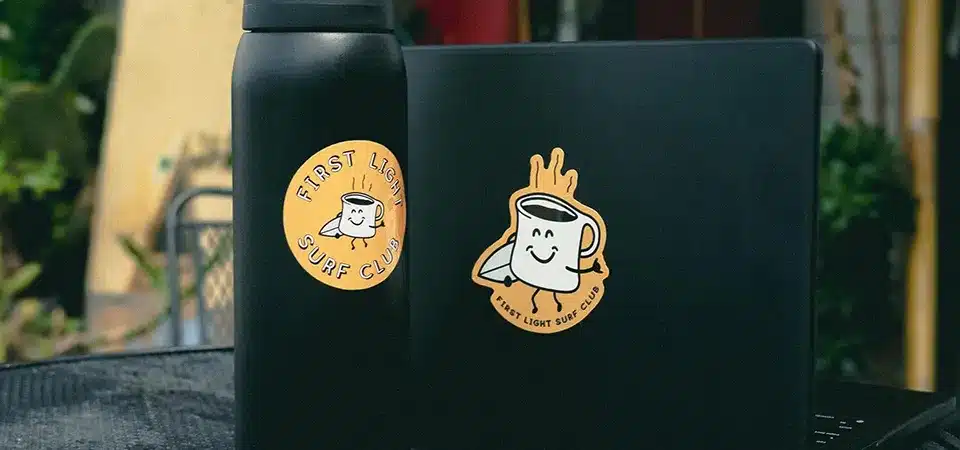
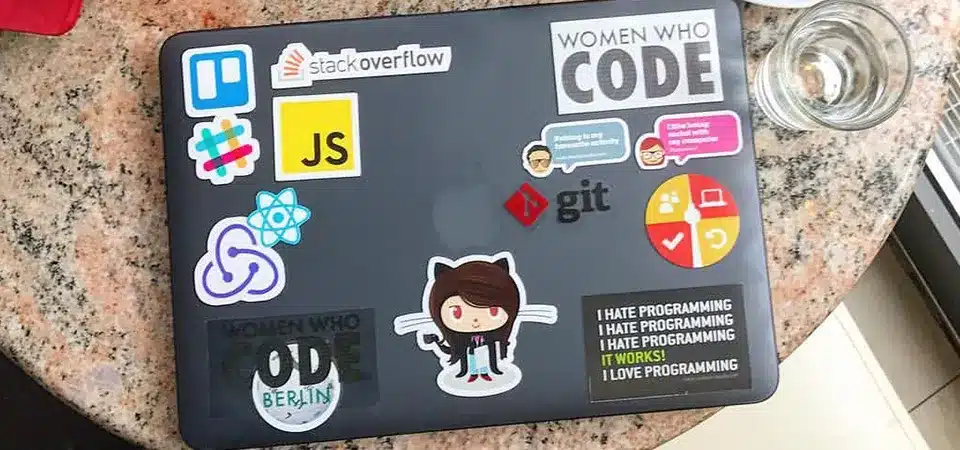
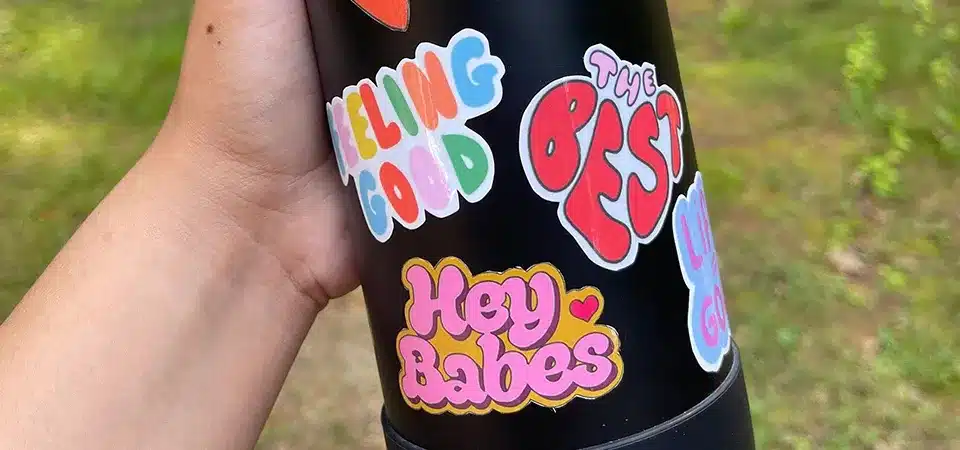
In the digital age, physical stickers have become a primary way for people to signal their identity. Whether it is a coding language logo or a local brewery decal, placing stickers on personal items like laptops and hydro flasks creates a portable collage of who you are.

We have seen a huge shift in my business over the last ten years. It used to be that companies bought stickers just for packaging. Now, "swag" is a massive industry. People treat their laptops and water bottles like vertical real estate. A sticker from a specific coffee shop or a software company is a subtle nod to others in the know. It says, "I have been here," or "I use this tool."
The materials have had to adapt to this. We now print almost exclusively on thick, UV-resistant vinyl with matte laminates for these clients because these items get shoved in backpacks and washed in sinks. A paper sticker wouldn't last a week on a Hydro Flask. This cultural shift has turned stickers into a fashion accessory. It is low-stakes commitment; you can cover your laptop, and when you get bored, you can peel them off and start a new "identity."
9. Stickers have their own street art scene
You walk past a stop sign or a lamp post and see it covered in tags and drawings. You might see vandalism, but the art world recognizes this as "Sticker Art" or "Slap Tagging," a huge subculture of graffiti.
Sticker bombing, or "slapping," is a sub-genre of street art where artists use stickers to put up their work quickly and widely. It became famous through artists like Shepard Fairey, whose "Obey Giant" campaign showed that a simple sticker could spark a global movement.
In the graffiti world, time is the enemy. The longer you stand there painting, the more likely you are to get caught. Stickers solve this. An artist can spend hours drawing a complex design at home, print it on high-tack vinyl (or even use free postal labels, known as "Priority Mail" slaps), and then apply it to a wall in one second as they walk by.
This is often called "getting up." Shepard Fairey is the king of this. He started with a weird sticker of Andre the Giant and pasted it all over Providence, Rhode Island, just to see if people would notice. It eventually grew into the worldwide "OBEY" brand. This proved that you don't need a gallery to show art; you just need a printer and some adhesive. In China, and globally, we see artists trading these "slaps" by mail, so an artist in Tokyo can have their sticker up on a wall in New York without ever visiting.
10. Sticker collecting has broken world records
You might think your drawer full of stickers is impressive, but it pales in comparison to the world champions. You will find that some people take the hobby of collecting adhesive art to extreme, record-breaking levels.
The Guinness World Record for the largest collection of stickers belongs to clear enthusiasts who have gathered over 100,000 unique items. There is also a record for the largest "sticker ball," proving that quantity can be just as impressive as quality in the sticker world.
Collectors are some of our most passionate customers. The current record for a single collection is held by a woman in the UK with over 102,000 stickers. Just imagine the organization required for that! But the "Sticker Ball" record is the one that amuses me. This involves taking stickers and layering them over and over until you have a massive sphere. The record-holding ball weighs over 230 pounds.
This speaks to the sheer volume of stickers produced globally. Because they are cheap and often given away for free, they accumulate. We often have "run-off" stickers in the factory—extras printed to ensure the count is right. In a home setting, these end up in drawers. The fact that someone dedicated the time to peel and stick thousands upon thousands of them to create a giant ball shows just how addictive the tactile sensation of stickers can be. It is a strange, sticky monument to persistence.
11. Pop culture stickers became a 90s obsession
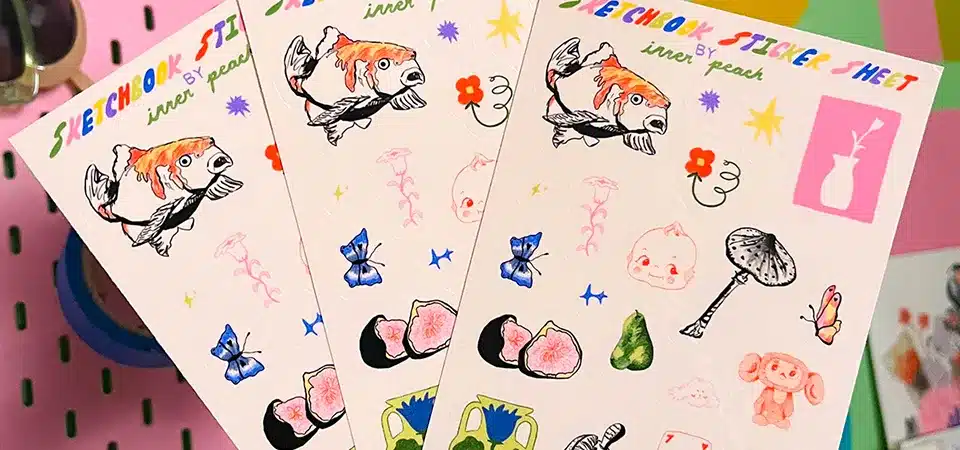
You remember the neon colors, the sparkles, and the sticker books if you grew up in the 90s. You should know that this decade was the "golden era" for commercial stickers, driven by brands like Lisa Frank and Sandylion.
In the 1990s, stickers became a major currency for children. Companies like Lisa Frank utilized bright, psychedelic colors and unique finishes like fuzz and foil to create a trading craze. Sticker albums were essential social tools on playgrounds across the world.
This era was a printing revolution. Before the 90s, most stickers were simple paper or basic vinyl. Lisa Frank pushed the limits of what a sticker could look like. We are talking about holographic foils, heavy glitter, "puffy" stickers filled with foam, and "oily" stickers that had liquid inside.
To manufacture these, you need specialized dies and multi-layer lamination processes. The defining feature of the 90s was the "sticker book"—pages of silicone-coated paper that allowed you to stick and unstuck your collection. It turned stickers into trading cards. Kids would trade a fuzzy panda for a holographic dolphin. We actually see a resurgence of this style now; retro aesthetic is huge. Clients are coming to me asking for "holographic" and "glitter" finishes that mimic that 1995 vibe. It proves that the emotional connection we formed with stickers as kids stays with us as adults.
12. Stickers used to be worn on faces
You think of makeup and tattoos as body decoration, but stickers had their moment too, hundreds of years ago. You might be shocked to learn that wealthy Europeans used small fabric stickers on their faces to hide blemishes and signal flirtation.
In 18th-century Europe, fashionable men and women wore "mouches" or beauty patches. These were small stickers made of silk or velvet, adhered with gum, used to cover smallpox scars. Eventually, the placement of the patch developed a secret language of courtship.
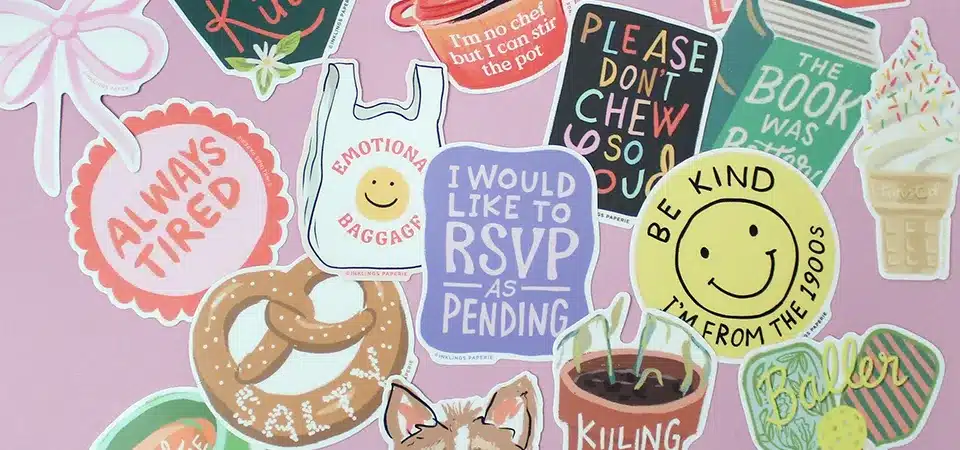
Long before we had acne patches (which are essentially modern hydrocolloid stickers), the French aristocracy wore mouches (flies). Smallpox was rampant and left terrible scars. To hide them, people cut shapes like stars, moons, or circles out of expensive black fabric and used a natural gum to stick them to their faces.
It became a coded language. A patch near the eye might mean "I am passionate," while one on the cheek could mean "I am open to flirtation." It is wild to think about, but these were the original "emojis." They were visual symbols worn on the body to communicate a feeling without speaking. Today, we see a modern version of this with "face gems" and decorative makeup stickers at music festivals. The technology has changed from gum and silk to medical-grade adhesive and plastic, but the desire to decorate our faces to send a signal remains exactly the same.
13. Stickers are still used in protests and activism
You see "I Voted" stickers or political slogans on lamp posts and realize they carry weight. You should understand that stickers remain one of the most effective, low-cost tools for political activism and grassroots movements.
Because they are cheap to produce and difficult to remove, stickers are a favorite tool for activists. From the "I Voted" sticker that encourages civic duty to subversive political messages placed in public spaces, they allow voices to be heard without a large budget.
In the digital age, you might think physical propaganda is dead, but it is actually growing. We print thousands of stickers for causes, charities, and political campaigns. Why? Because a sticker is a physical interruption in public space. You can scroll past a post on your phone, but you have to physically look at a sticker on a subway pole or a bathroom mirror.
The "I Voted" sticker leads this category. It is a badge of honor. Studies have actually shown that people are more likely to vote if they get a sticker to prove it—it’s social proof. On the other side, activists use difficult-to-remove "eggshell" stickers (which shatter into tiny pieces if you try to peel them) to ensure their message stays up. It is a constant battle between the printer and the cleaner. But ultimately, stickers survive in activism because they are the voice of the people: affordable, visible, and persistent.
Conclusion
From ancient markets to modern street art, stickers have always been more than just sticky paper; they are powerful tools for communication, commerce, and creativity that continue to evolve.