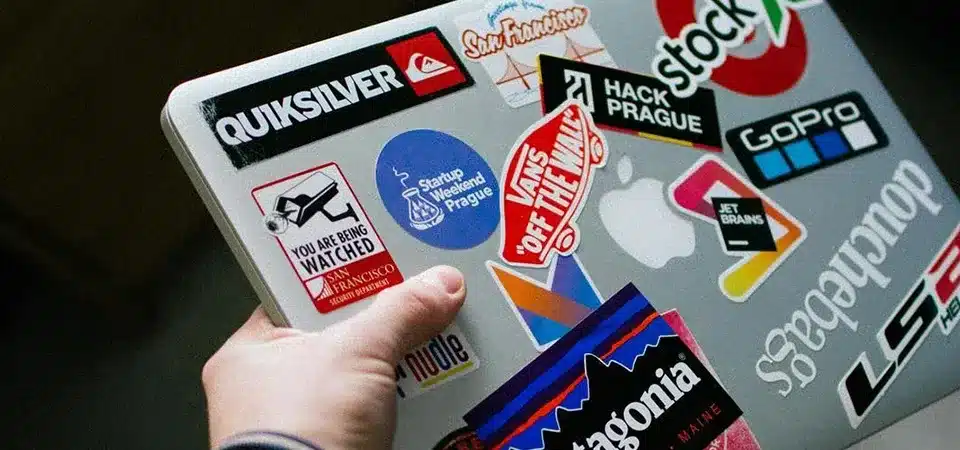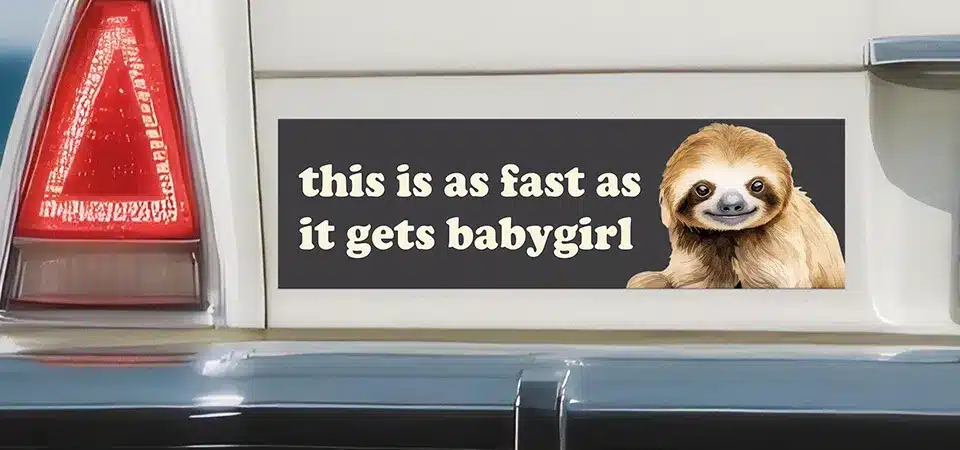
You want to put a sticker on your car but worry it will fade, peel off in the rain, or ruin your paint. It's a valid concern—a bad sticker looks terrible and can be a pain.
Car stickers are self-adhesive graphics made from weatherproof vinyl specifically for vehicles. Unlike regular paper stickers, they use special materials and adhesives to withstand sun, rain, and temperature changes, allowing for removal without damaging your car's paint.
In my sticker printing business, I see this all the time. Someone tries to save a few dollars with a cheap sticker, and it turns into a faded, peeling mess in a few months. A "real" car sticker is an engineered product designed to look great and last for years on the road. But knowing the difference between a quality car sticker and a simple label is key. Let's break down what makes them so special.
What Are the Key Features of Car Stickers?
You see stickers peeling and fading on cars all the time. You don't want that for your car, so how do you pick one that will actually last?
The key features of a quality car sticker are its weatherproof vinyl material, UV-resistant inks with a protective laminate, and a special automotive-grade adhesive that holds strong but can be removed cleanly.

A car sticker is more than just a pretty design; it’s a multi-layered product built for a harsh environment. When clients ask me what to look for, I tell them to focus on these three layers. Getting any one of them wrong is a recipe for failure.
The Vinyl Material
This is the foundation. Quality car stickers are printed on vinyl, not paper. But even vinyl has different grades. For cars, we use premium automotive-grade vinyl. This material is flexible, so it conforms to the gentle curves of a car body. It also expands and contracts with temperature changes without cracking or peeling. A cheap vinyl will become brittle and fail.
The Ink and Laminate
The design is printed on the vinyl using UV-resistant inks that won't fade quickly in the sun. But the real hero is the laminate. After printing, we apply a clear, protective top layer. This laminate acts like a shield, protecting the ink from scratches, chemicals from car washes, and most importantly, the sun's damaging UV rays. An unlaminated sticker will fade and scratch easily.
The Adhesive
This is what holds everything together. Automotive adhesives are designed to create a strong bond with a car's clear coat but can also be removed without leaving a sticky mess or pulling up the paint. It's a delicate balance that cheap adhesives can't achieve.
What Are the Benefits of Using Car Stickers?
A full paint job or a professional wrap is expensive and permanent. You want an easier, less-committal way to customize your car or advertise your business.
The main benefits are affordability, easy application and removal, and endless customization. They offer a low-risk, high-impact way to personalize a vehicle or brand a fleet without a huge investment.
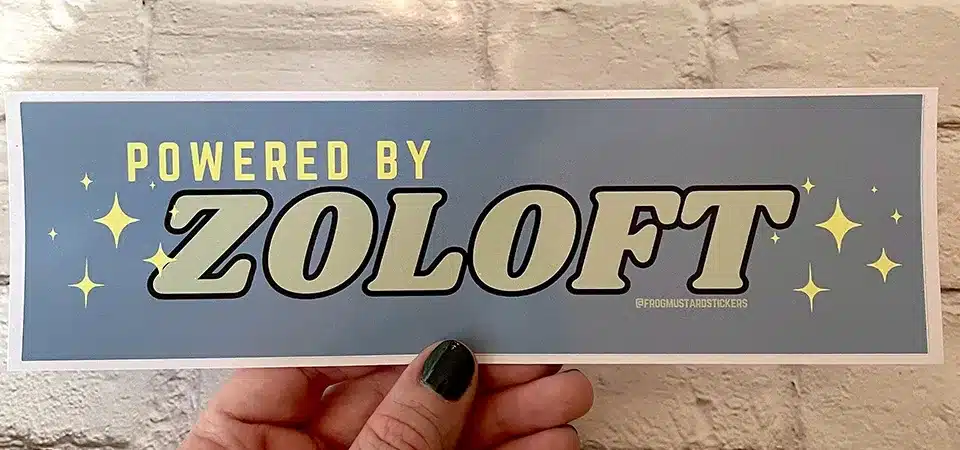
I work with a lot of small businesses who want to get their logo on a company vehicle. Most of them can't afford a full wrap, which can cost thousands of dollars. Car stickers and decals are the perfect solution. They get the professional branding they want for a fraction of the cost. The benefits are clear when you compare the options.
| Feature | Car Stickers | Custom Paint / Full Wrap |
|---|---|---|
| Cost | Low ($) | Very High ($$$$) |
| Turnaround Time | Fast (Hours to a few days) | Slow (Days to weeks) |
| Permanence | Not-permanent, easily removable | Permanent or requires professional removal |
| DIY Friendly? | Yes, for most sizes | No, requires professional skill |
Beyond the cost, the flexibility is a huge benefit. You can change your design whenever you want. If you rebrand your business or just get tired of a look, you can easily remove the old stickers and apply new ones. This level of quick and affordable customization is impossible with paint or wraps.
So, What Is the Point of Car Stickers?
You see stickers everywhere, from band logos to "baby on board" signs. Are they just for fun and decoration, or is there more to it?
The point of car stickers is self-expression, advertising, and information. They are a powerful and visible tool for sharing your personality, promoting a brand, or communicating important messages to other drivers.
As a sticker printer, I get to see the full range of reasons people use them. They are a simple, effective form of communication on the road. I've printed stickers for just about every purpose you can imagine. We can group most of them into three main categories.
Personal Expression
This is the most common reason. People want their cars to reflect who they are. Stickers are like a personal billboard for your interests, sense of humor, or beliefs. This includes:
- Showing off your favorite bands, movies, or sports teams.
- Sharing your travel destinations or hobbies.
- Making a political or social statement.
Business and Branding
For businesses, car stickers are a form of mobile advertising. I've helped countless small businesses turn their vehicles into marketing assets. These stickers can include:
- Company logos and contact information on work vans.
- Promotional QR codes that link to a website.
- Branding for delivery vehicles or freelance services.
Functional and Informational
Some stickers serve a very practical purpose. They communicate information quickly and clearly to other drivers. Examples include:
- "Baby on Board" or "New Driver" signs.
- Parking permits or access badges.
- Affiliation with a club or organization.
And What Is a Car Decal?
You hear the words "sticker" and "decal" used for cars all the time. Are they the same thing, or are you using the wrong term?
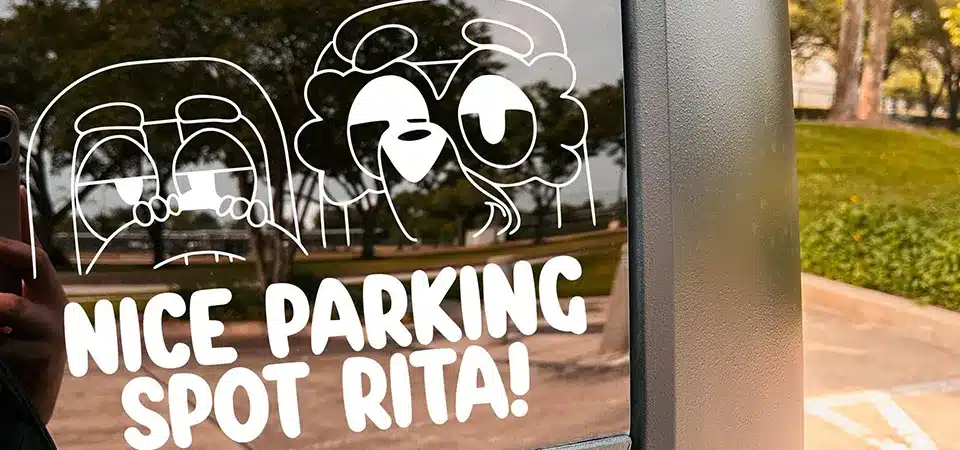
A car decal is typically a design cut from vinyl, like lettering or an intricate logo. Unlike a printed sticker, a decal is transferred to the surface, leaving just the design with no background.

This is a question I get almost daily in my shop. While people use the terms interchangeably, there is a technical difference that matters for ordering and application. A "sticker" is usually printed on a piece of vinyl and then cut out, background and all. A "decal" is cut from a sheet of solid-colored vinyl, and the excess vinyl is weeded away. The final design is then held together by transfer tape for application. Once you apply it and peel off the transfer tape, only the individual letters or shapes are left on the car.
Here's a simple way to think about it:
| Feature | Car Sticker | Car Decal |
|---|---|---|
| Form | A single piece of printed material. | Individual pieces of cut vinyl. |
| Background | Yes, the design has a background shape. | No background, only the design remains. |
| Application | Peel and stick. | Apply with transfer tape, then remove it. |
| Common Use | Full-color images, logos, bumper stickers. | Single-color lettering, simple logos. |
A client once wanted his business website on his rear window. He asked for a "clear sticker." I explained that what he really wanted was a vinyl decal. This would give him clean, professional-looking letters without a shiny, rectangular background. That's a decal.
Conclusion
A car sticker is a durable, multi-layered vinyl graphic made for vehicles. It's a cost-effective way to express yourself or promote a brand, and different from a decal in its form and application.