Skip to content

You have a great design, but you are paralyzed by the endless dropdown menus of material choices. It is incredibly frustrating to pay for custom printing only to have the stickers peel off, fade in the sun, or look cheap because the material clashes with your product.
The correct sticker type depends entirely on the application surface and environment. Vinyl stickers are the most versatile for outdoor durability, while die-cut and kiss-cut refer to how the backing is trimmed. Specialty options like clear, holographic, and high-tack stickers serve specific purposes ranging from clear branding to industrial strength adhesion.
In my years running a printing business, I have seen that the biggest mistake clients make is choosing a sticker based on how it looks on a computer screen rather than how it performs in real life. I want to walk you through the 13 specific types we encounter most often, so you never waste money on the wrong choice again.
1. Vinyl stickers
You need a sticker that can survive the dishwasher, the rain, or the wear and tear of a daily commute. Paper stickers simply fall apart when they get wet, leaving a gross residue.
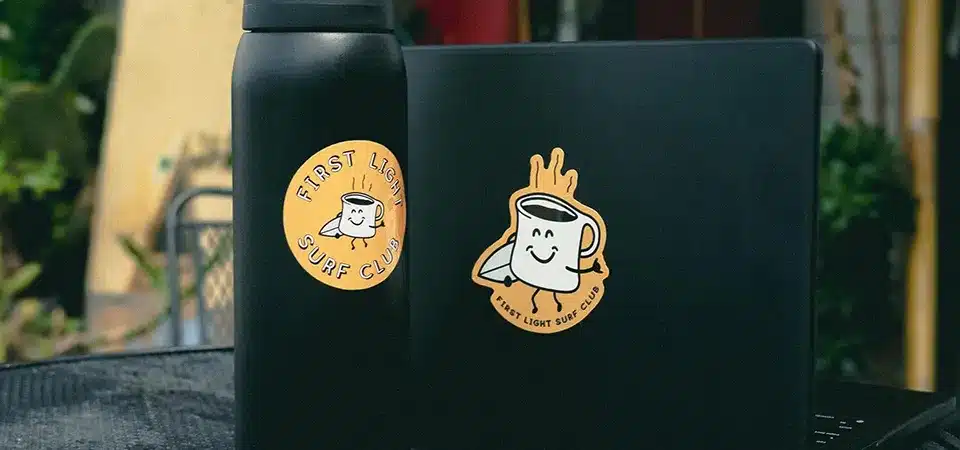
Vinyl stickers are the most durable and versatile option because they are made of plastic (PVC), making them waterproof, UV resistant, and tear-proof. They are the safest choice for water bottles, laptops, car bumpers, and any outdoor application where longevity is required.
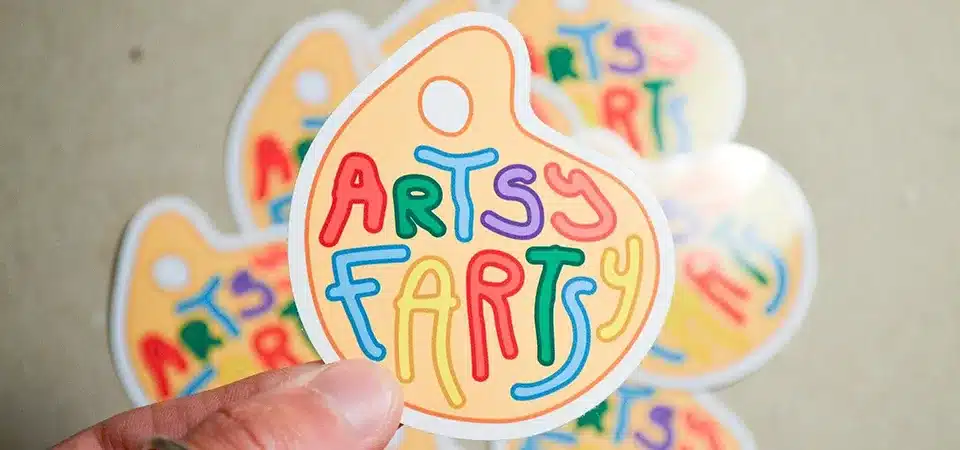
Vinyl is what I recommend to 90% of my customers because it is the "safe" bet. Unlike papers, which absorb moisture and oils, vinyl is a solid plastic synthetic. In our factory, we print on large rolls of white vinyl using eco-solvent or UV inks that bite into the surface. This combination creates a product that can last 3-5 years outdoors without fading.
When I talk about vinyl, I am distinguishing it from "paper labels." If you put a paper label on a shampoo bottle, it will rot in the shower. Vinyl will not. It has a slight stretch to it, meaning it can handle slight curves on bottles or helmets without wrinkling immediately. It also usually comes with a stronger adhesive than standard paper stationery stickers. If you are unsure where your customer will stick your design, choose vinyl. It covers all bases.
| Feature | Vinyl Stickers | Paper Stickers |
|---|---|---|
| Water Resistance | 100% Waterproof | Absorbs water/Swells |
| Tear Strength | Stretching, hard to tear | Rips easily |
| Outdoor Life | 3-5 Years | A few weeks |
| Best Use | Products, Cars, Laptops | Packaging seals, Notebooks |
2. Shaped stickers
You want to move away from boring squares and rectangles, but you don't need a complex custom contour. Standard shapes offer a clean geometry that frames your logo perfectly.
Shaped stickers—such as circles, ovals, and rounded squares—draw the eye toward the center design and eliminate sharp corners that tend to peel up. They provide a polished, professional look for jar lids, coffee bags, and candle labels where symmetry is key.
While custom contours are fun, simple geometric shapes (circles, ovals, squares with rounded corners) are the workhorses of product packaging. In my experience, sharp 90-degree corners are the weak point of any sticker. They catch on fingernails, pockets, and boxes, leading to "dog ears" (where the corner peels up).
By choosing a shaped sticker with rounded edges—or a perfect circle—you physically reduce the chance of the sticker lifting. Circles are particularly powerful for logos because the human eye is naturally drawn to the center of the shape. I often see coffee shops use circle stickers to seal bag flaps; the shape looks intentional and neat, whereas a crooked square label looks messy. We use laser die-cutters to ensure these shapes are mathematically perfect, giving your small business a "big brand" feel without the cost of a custom die mold.
| Shape | Best Application | Why it works |
|---|---|---|
| Circle | Jar lids, seals | Centers the eye; no corners to peel |
| Oval | Shampoo bottles | Fits tall specific design layouts |
| Rounded Square | Product boxes | Modern look; safer edges than sharp squares |
3. Die cut stickers
You want your customers to take your sticker and immediately put it on their laptop or phone case. If you hand them a loose square with a lot of white background, it looks unfinished.
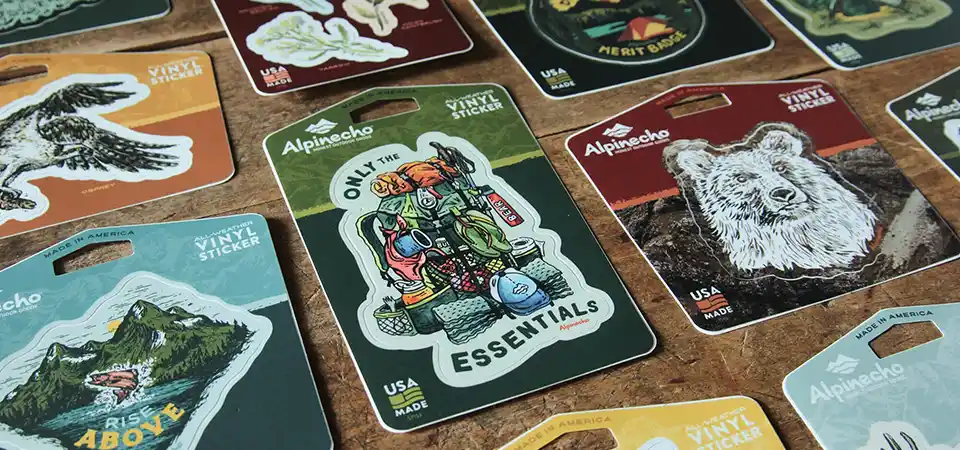
Die cut stickers are cut all the way through the vinyl and the backing paper to match the exact shape of your design. This creates a premium, standalone product that looks like a custom object, making it the ideal choice for band merch, promotional stacks, and event giveaways.
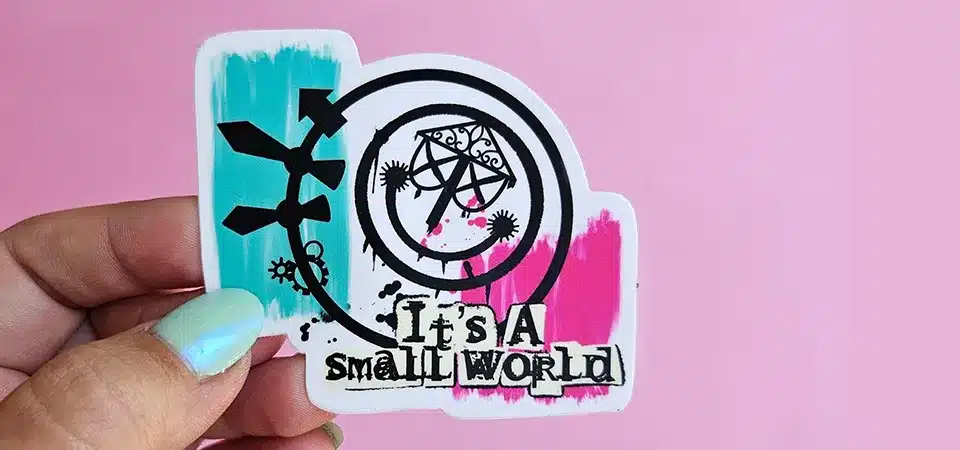
"Die cut" refers to the cutting method. In the old days, we used a heavy metal die (like a cookie cutter) to punch shapes. Now, we use lasers or digital blades, but the result is the same: the backing paper matches the sticker shape.
Why does this matter? It is about perceived value. When you hold a die-cut sticker, it feels like a finished piece of merchandise. If I hand you a square sheet with a shaped sticker inside it, it feels like office supply waste. I always tell artists: if you are selling your stickers individually or putting them in swag bags, pay a little extra for die cutting. It eliminates the excess white background and makes the visual impact immediate. It creates a "what you see is what you get" experience for the customer.
- Visuals: No extra white backing paper borders.
- Marketing: Looks expensive and intentional.
- Protection: The edge of the backing is flush with the sticker, so the sticker edge is protected until peeled.
4. Kiss cut stickers
You have a complex design with delicate edges, or you want to give away a sheet with multiple stickers on it. Die cutting these designs creates a mess of loose paper confetti.
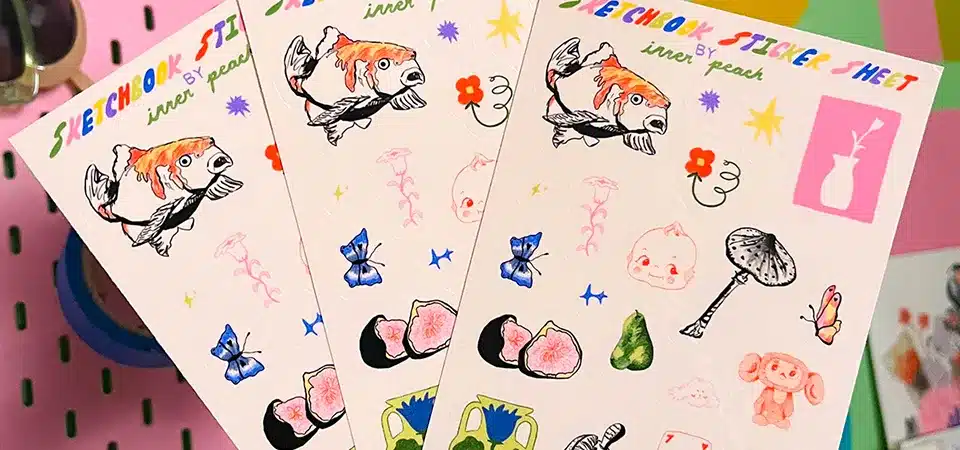
Kiss cut stickers are cut through the vinyl layer but leave the backing paper intact, creating a square border around the sticker. This format is superior for sticker sheets, intricate designs that need backing support, and high-volume application where speed is essential.
The term "kiss cut" means the blade touches the sticker lightly—just enough to slice the vinyl, but not the paper underneath. This leaves you with a larger square backing for easy handling.
I recommend kiss cuts for two specific scenarios. First, Sticker Sheets. If you want a branding sheet with your logo, a slogan, and a mascot all on one page, this is the only way to do it. Second, Retail Efficiency. If your staff needs to peel and stick 500 labels on coffee cups during a rush, kiss cut is faster. The extra backing gives you something to hold onto, making the peeling action quicker than struggling with the flush edge of a die-cut sticker. The extra backing also acts as a frame, protecting delicate tendrils of a design (like the tail of an illustration) from getting bent in transit.
| Feature | Die Cut | Kiss Cut |
|---|---|---|
| Backing Paper | Cut to shape | Square/Rectangular |
| Peeling Speed | Slow (requires fingernail) | Fast (easy to bend and flick) |
| Best For | Swag, Single Sale | Sheets, High-volume Packaging |
5. Clear stickers
You want your logo to appear as if it is printed directly onto a glass jar or a clear plastic bottle, but you cannot afford direct screen printing. A white background block would ruin the aesthetic.
Clear stickers are printed on transparent vinyl, allowing the surface of your product to show through the negative space. They are perfect for glass jars, beverage bottles, and cosmetics where you want a seamless, painted-on appearance without the high cost of direct printing.
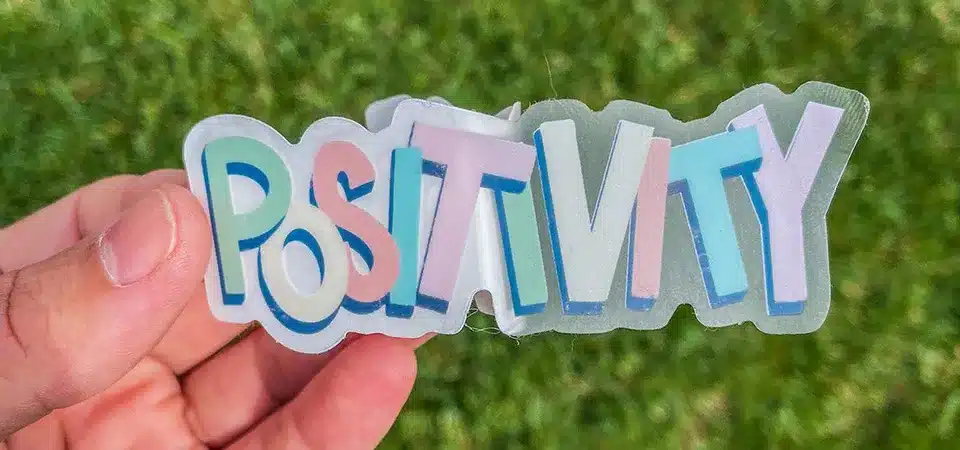
The crucial thing to understand about clear stickers is the need for "White Ink." Standard printers work with CMYK (Cyan, Magenta, Yellow, Black). These inks are translucent. If you print red ink on a clear sticker and stick it on a dark beer bottle, the red will disappear.
To fix this, we print a layer of solid white ink underneath the colored parts of your design. This makes the colors pop and remain opaque, even on dark glass. When ordering clear stickers, always check if your printer offers "white ink underprinting." Without it, your design will look like a washed-out stain. Clear stickers work best on smooth surfaces like glass or aluminum; they often show air bubbles more than white vinyl, so you must apply them slowly and carefully.
- Glass Jars: Honey, jam, or candle jars.
- Aluminum Cans: Craft beer or cold brew.
- Windows: Subtle branding that doesn't block the view.
6. Transfer stickers
You see crisp white lettering on a storefront window or a car windshield with absolutely no background material at all. You want that professional, hand-painted signage look.
Transfer stickers (or vinyl decals) consist of individual pieces of vinyl held together by masking tape, with no background material. They are used for typography, car window graphics, and business hours signage where you want the design to look like it is physically part of the surface.
Transfer stickers are completely different from regular stickers. They come in a "sandwich" of three layers:
- Backing Paper: Protects the adhesive.
- Vinyl Decal: The actual design (usually a single color, cut into shape).
- Transfer Tape: A masking tape layer on top.
You peel the backing off, use the tape to stick the vinyl to the wall, rub it hard, and then peel the tape away. The result is just the vinyl letters remaining. There is no clear film or white border connecting the letters. This is the industry standard for Storefront Hours, Vehicle Lettering, and clean minimalist logos. They are more difficult to apply than a slab sticker, but the result is far more professional. They are strictly for flat, hard surfaces; they do not work well on textured or flexible items.
7. Holographic stickers & glitter
You are launching a limited edition product or want to appeal to a younger, trend-focused demographic. A flat color print feels too boring for the energy of your brand.
Holographic and glitter stickers use a metalized vinyl base that diffracts light into a rainbow spectrum or sparkles. They provide an eye-catching, high-value aesthetic that is extremely popular for tech brands, breweries, and streetwear merchandise.
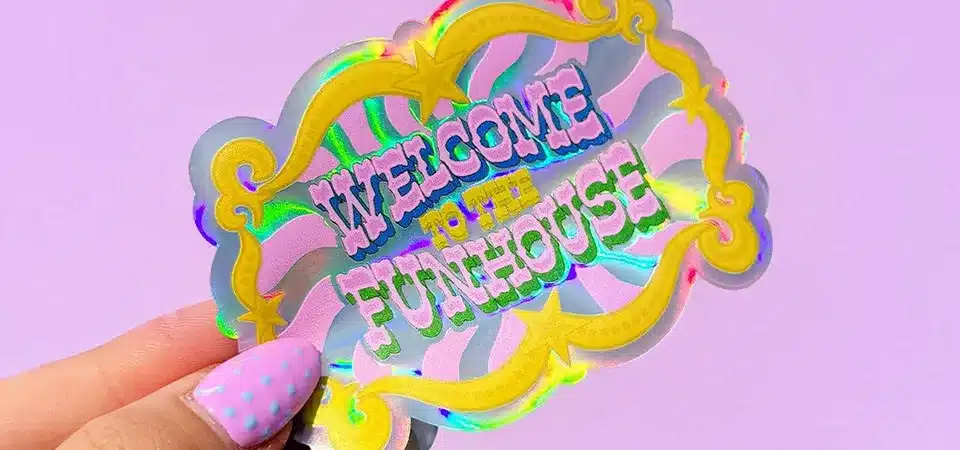
When designing for holographic vinyl, you have to think differently. We print on top of the rainbow material. Any area of your design that is white in your file becomes holographic on the sticker. Any area that is black blocks out the effect completely.
This allows for incredible creativity. You can have a black logo with holographic edges, or a character with "magic" glowing eyes. The material itself is usually waterproof and durable like standard vinyl, but it scratches a bit more easily due to the metallic finish. Glitter stickers work similarly but have physical texture or embedded flake patterns within the smooth laminate. These stickers scream "premium" and "collectible." I often see artists sell holographic versions of their art for $2 more than the standard version, simply because the perceived value is so much higher.
- High Contrast: Use thick black lines to make the rainbow pop.
- Negative Space: Leave empty areas in your design so the material can shine.
- Lamination: Always ask for UV lamination to prevent the metallic layer from oxidizing.
8. Foil stickers and metallic foil
You run a luxury brand, a wedding stationery business, or sell high-end cosmetics. You need a label that signifies elegance, tradition, and quality.
Foil stickers use gold or silver metallic paper to create a sophisticated, reflective finish. They are the primary choice for wedding envelopes, certificates, awards, and premium candle packaging where a touch of luxury is required to justify a higher price point.
There are two ways we achieve this look. True "Hot Foil Stamping" involves pressing a heated die into the paper, leaving a debossed gold impression. This is the ultra-luxury standard for wine labels. The more common and affordable method is printing on metallic stock (similar to holographic, but just gold or silver).
Foil works best on matte surfaces. The contrast between a matte paper texture and the shiny metal foil is what creates the "rich" look. I advise against using these for outdoor use. Foil materials are usually paper-based or thin polypropylene that will tarnish or flake if exposed to rain and sun for months. Keep these strictly for indoor packaging, envelopes, and product seals.
| Type | Best For | Look & Feel |
|---|---|---|
| Gold Foil | Weddings, Chocolate | Warm, Traditional Luxury |
| Silver Foil | Tech, Men's Grooming | Cool, Modern, Sleek |
| Rose Gold | Cosmetics, Jewelry | Trendy, Feminine, Soft |
9. Fluorescent stickers
You need a label that screams "LOOK AT ME" from across the room. You are marking boxes for a moving company, highlighting a discount, or placing safety warnings on factory equipment.
Fluorescent (neon) stickers use highly pigmented glowing paper—usually in yellow, orange, pink, or green—to ensure maximum visibility in daylight. They are essential for 'For Sale' signs, hazard warnings, inventory color-coding, and promotional flashes that need to disrupt a customer's visual scanning.
Fluorescent stickers are functional beasts. We don't print them for their artistic sublety; we print them to be aggressive. The pigments used in neon paper convert UV light into visible light, making them appear brighter than their surroundings.
However, there is a major trade-off: Lightfastness. Neon pigments effectively "burn out" very quickly. If you put a neon orange sticker in direct summer sunlight, it will turn pale yellow or white within a few months. They are not for long-term outdoor branding. They are for immediate action. I recommend them for warehouse logistics (color-coding expiry dates), retail discount bursts ("50% OFF!"), or temporary safety notices. Stick to black text on neon backgrounds for the highest possible contrast rating.
- Retail: "Sale" or "New Arrival" bursts.
- Safety: "Heavy Load" or "Fragile" shipping labels.
- Events: Wristbands or access passes.
10. Biodegradable & eco-friendly stickers
Your brand identity is built on sustainability. Sticking a piece of PVC plastic (vinyl) on your compostable takeout box or recycled paper bag feels like a betrayal of your values.
Biodegradable and eco-friendly stickers are made from materials like wood pulp, sugar cane fiber, or hemp, paired with a compostable adhesive. They are the ethical choice for organic food brands, sustainable clothing tags, and eco-conscious packaging, allowing the entire package to be disposed of naturally.
Going green means accepting some limitations. Biodegradable stickers are essentially fancy paper. They are not waterproof (though some are splash-resistant), and they will not last 5 years on a car bumper. But that is the point—they are designed to break down.
In our shop, we use materials like Kraft Paper (the brown, natural look) or White Eco-Paper made from bagasse (sugar cane waste). The critical part is the glue. Standard glue makes a paper sticker non-compostable. You must request "certified compostable adhesive" if you want the sticker to go into a green bin. These offer a fantastic texture and "earthy" feel that instantly communicates sustainability to your customer. They look great on coffee bags, soap boxes, and sandwich wraps.
| Material | Appearance | Durability | Disposal |
|---|---|---|---|
| Kraft Paper | Natural Brown, Textured | Low (Indoor only) | Compostable/Recyclable |
| Sugarcane | Textured Matte White | Low (Splash proof) | Compostable |
| Hemp Paper | Flecked, Off-white | Medium | Compostable |
11. Window stickers
You want to advertise on your shop window, but your landlord prohibits permanent signage, or you want to be able to change the promo next month without spending hours scraping glue off the glass.
Window stickers fall into two categories: "Static Clings" which use static electricity to hold onto glass without glue, and "Adhesive Window Vinyl" which uses a semi-permanent glue. Clings are best for temporary promos, while adhesive vinyl is better for long-term store hours and heavy-duty signage.
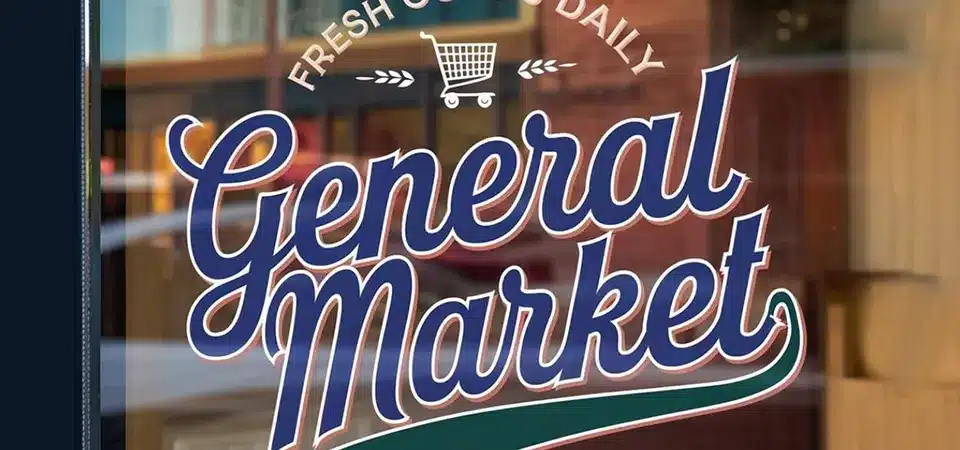
When ordering window stickers, the most important question I ask is: "Are you sticking this on the inside looking out, or the outside looking at it?"
- Front Adhesive (Inside Glass): We print the design on the sticky side of clear vinyl (or print on clear and back it with white). You stick it inside your shop window. This protects the sticker from rain and vandals.
- Static Cling: This material has no glue. It feels like a smooth rubber sheet. You can stick it, peel it, and move it 100 times. It is perfect for "Holiday Sale" signs that you only put up once a year. However, if the window gets very cold (condensation), clings can fall off.
- Perforated (One-Way Vision): This is the mesh vinyl you see on bus windows. It has tiny holes. From the outside, you see a full graphic. From the inside, you can see out. This allows you to brand a full window without blocking the light.
12. Heavy duty & special use stickers
You are labeling a tractor, a rental kayak, or a piece of machinery that gets power-washed daily. Standard vinyl will peel off in a week under these conditions.
Heavy duty stickers use a "High-Tack" aggressive adhesive and a double-thick laminate layer to withstand extreme abuse. They are engineered for industrial machinery, sports equipment, outdoor floors, and low-energy surfaces like polyethylene tanks where standard stickers fail to grip.
Standard stickers sit on top of a surface. Heavy-duty stickers with High-Tack adhesive flow into the surface. If you look at a plastic kayak or a powder-coated metal tool chest under a microscope, it is bumpy. Standard glue only touches the peaks of the bumps. High-tack glue is thicker and softer; it oozes into the valleys, creating 100% surface contact.
We also modify the top of the sticker. We apply a thick "wear layer" laminate (sometimes 12-20 mils thick, compared to the standard 3 mils). This protects the print from abrasion, chemicals like gasoline or oil, and heavy impact.
- Best Uses: Hard hats, Construction tools, Rental equipment (Asset tags), Floor decals (anti-slip), Garbage bins.
- Warning: Do not put these on your laptop unless you never want to take them off. Removing them is extremely difficult.
13. Novelty, fun & custom stickers
You want to sell a feeling, not just a logo. You want to engage kids (or adults who act like kids) with a tactile, interactive experience.
Novelty stickers use specialized inks and manufacturing to become toys in themselves. This includes "Glow-in-the-Dark" for night visibility, "Scratch-and-Sniff" for sensory marketing, and "Puffy" or "Epoxy Dome" stickers that add 3D texture, making them highly collectible and engaging.
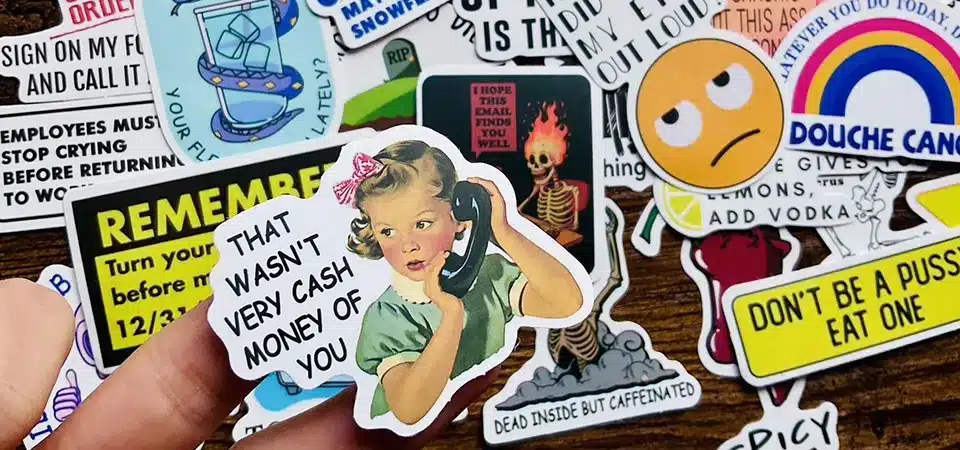
Stickers don't have to be flat images.
- Epoxy Domes: We pour a clear liquid resin over a vinyl sticker. It hardens into a clear bubble. This makes the sticker look like a jewel or a badge. It is incredibly durable and looks very expensive. Great for branding heavy appliances or car interiors.
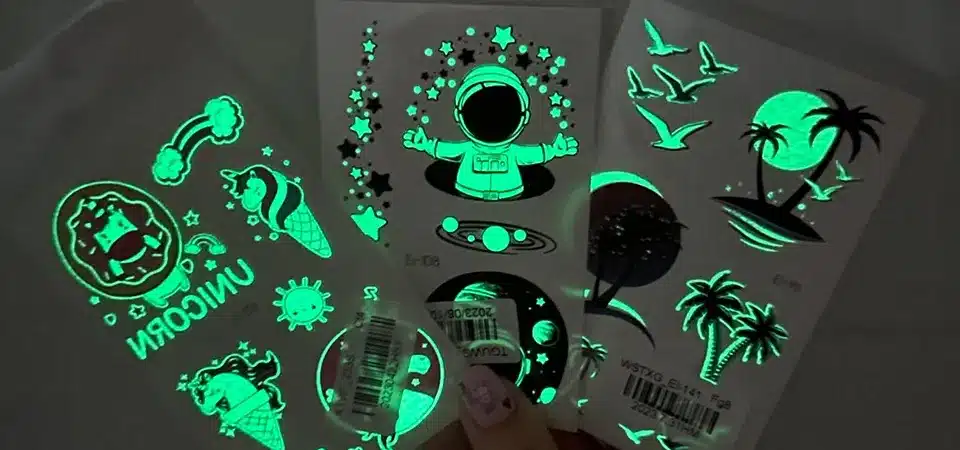
- Glow-in-the-Dark: Uses photoluminescent vinyl. It charges in the light and glows green in the dark. Bands and Halloween brands love these.
- Scratch-and-Sniff: Yes, these still exist! We use encapsulated scent oils. When you scratch the sticker, you break the capsules. Pizza shops, candle brands, and fruit companies use these for direct mail marketing.
These types of stickers are rarely "functional" in the industrial sense, but they have the highest "viral" potential. People show them to their friends. They play with them. In marketing, that physical interaction is gold.
Conclusion
Choosing the right sticker comes down to matching the material to its life cycle: use vinyl for outdoor durability, paper or eco-options for biodegradable packaging, heavy-duty high-tack for industrial gear, and specialty finishes like foil or holographic to create a premium visual impact.